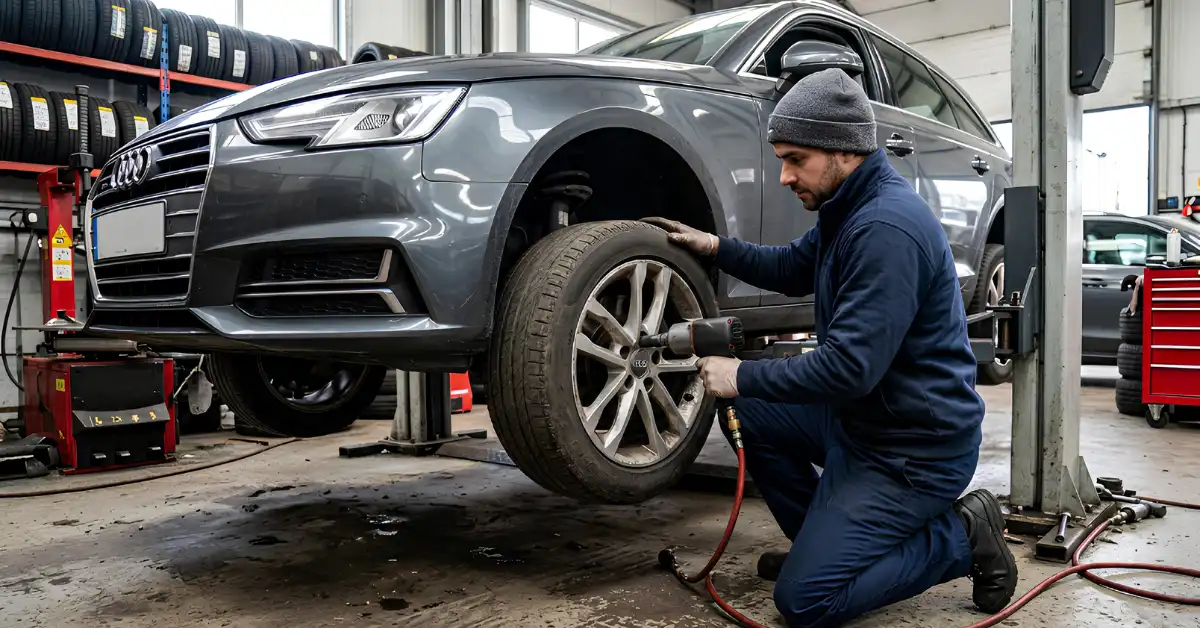
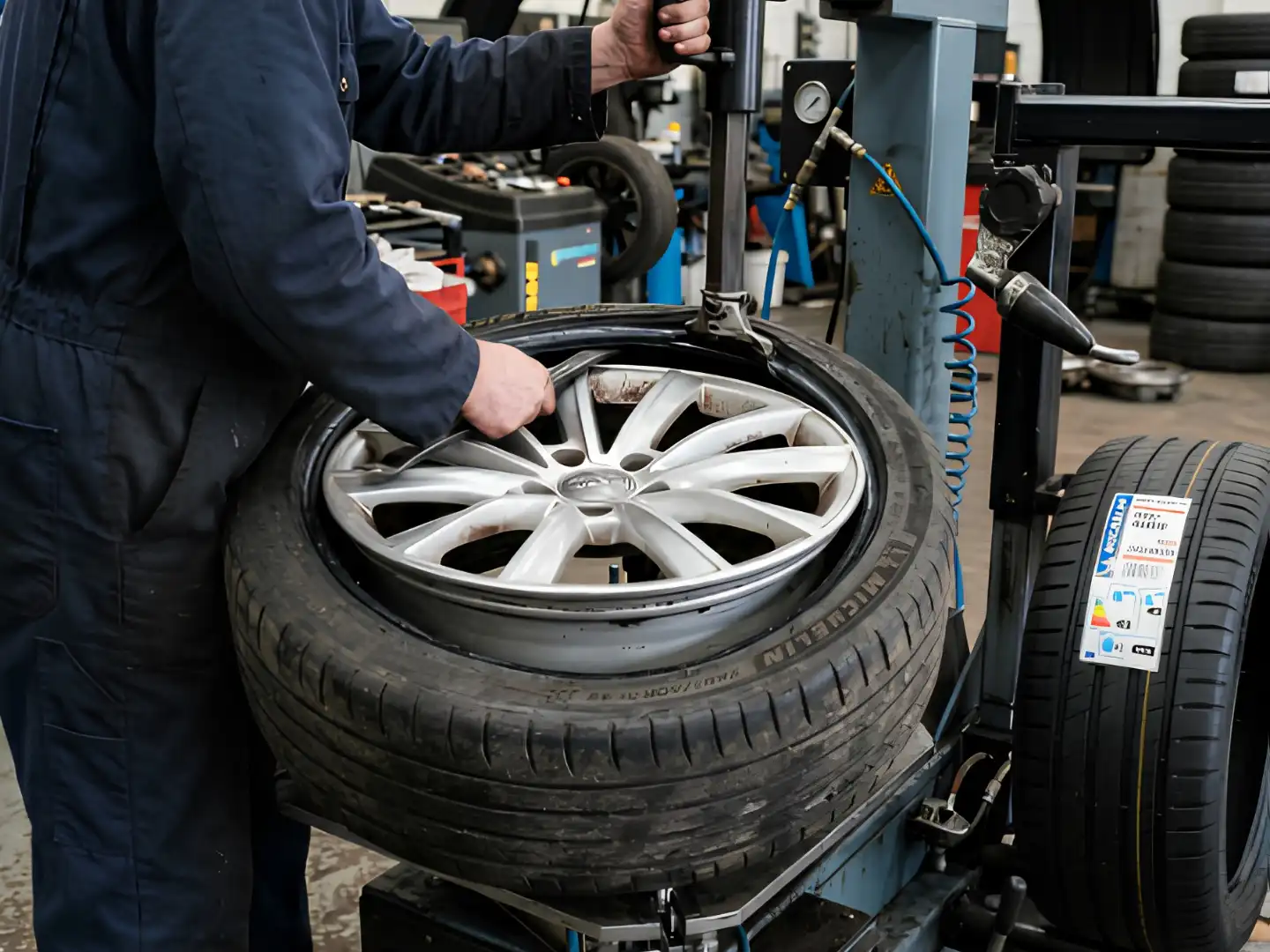
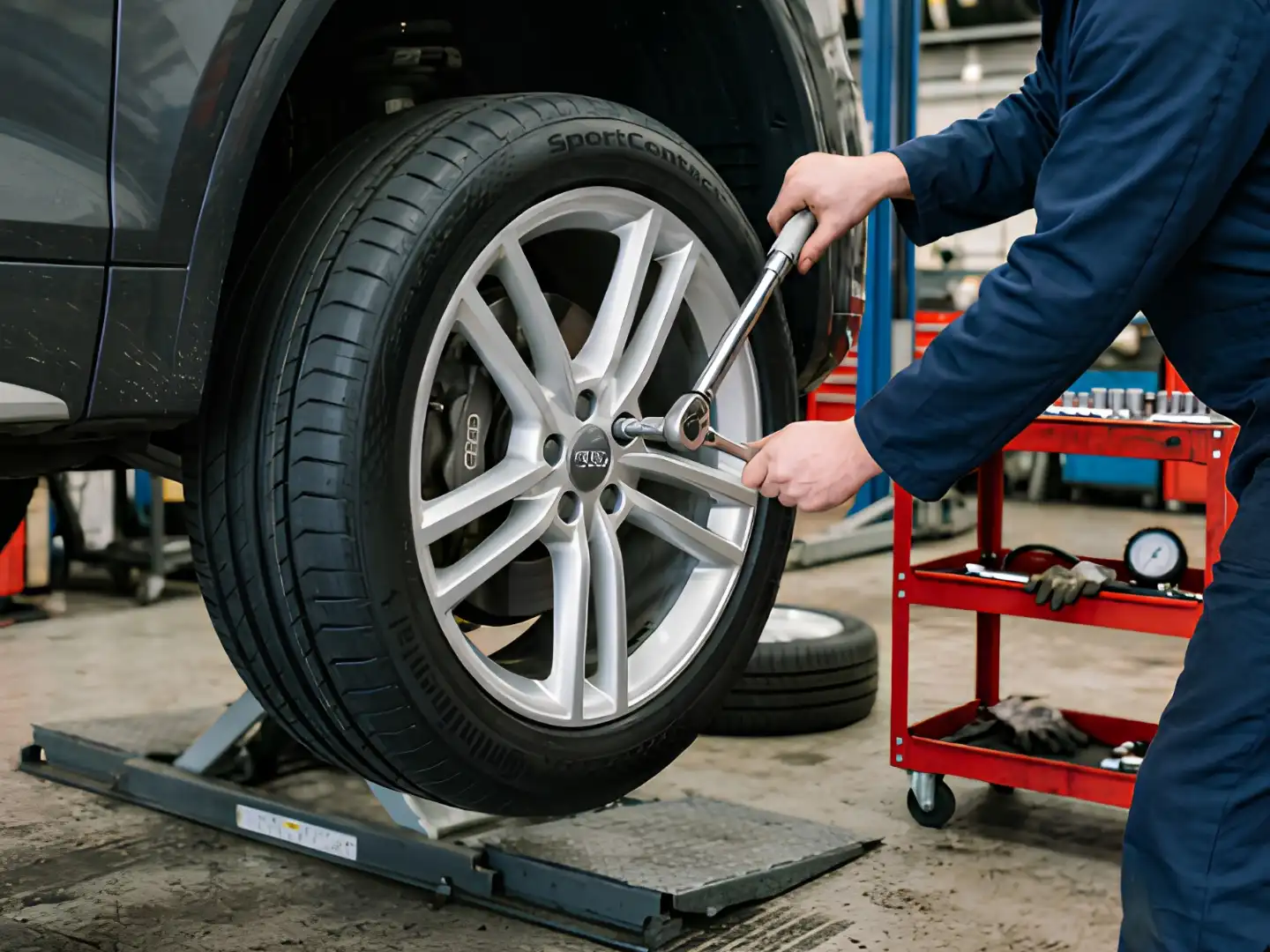
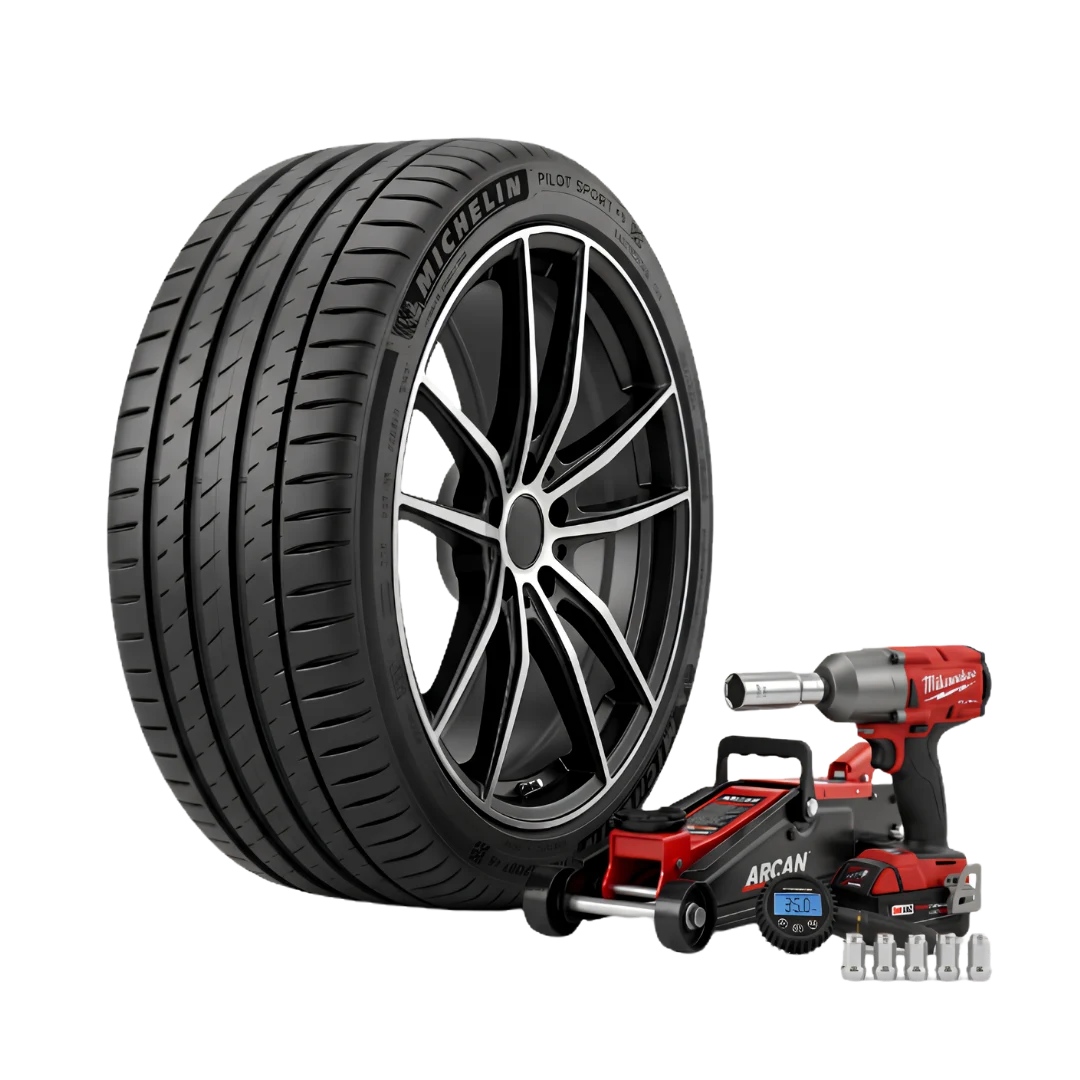
Zenfo Auto Services fits Audi tyres in Abu Dhabi, matching the load index, speed rating, and size to your VIN plate. This is part of our full Audi repair services in Abu Dhabi offering. Every wheel gets balanced on a computer-controlled machine, and every bolt gets torqued to Audi's exact figure, not a generic workshop guess.
This is the legal minimum tread depth under UAE traffic law. A tyre worn past this point loses grip fast in sudden rain, and it fails a routine vehicle inspection.
A TPMS warning light on the dash
Audi's tyre pressure monitoring system flags a drop as small as 0.2 to 0.3 bar below the placard value. It rarely means the sensor itself is faulty.
Sidewall cracking or visible bulging
Cracks across the sidewall, or a bulge from an impact, mean the internal structure has already failed. The tyre needs replacement, not a patch.
Vibration through the steering wheel at speed
Uneven wear or an out-of-balance wheel causes vibration that usually gets worse between 80 and 120 km/h.
A slow leak that keeps returning
A puncture repaired once, then losing pressure again within weeks, usually means the repair sat in the wrong zone, or a second puncture got missed.
Uneven wear across the tread
Wear on one edge, or in the centre, points to an alignment fault, though low or high pressure can cause it too, not a tyre defect. Where the pull continues even after correct pressure, a wheel alignment check usually explains what a tyre change alone won't fix.
Your options
Tyre Repair or Full Replacement: Which Your Audi Needs
Not every puncture ends in a new tyre. The right call depends on where the damage sits and how deep it runs.
Option A
When Repair Is Enough
A puncture inside the central tread area, under 6mm across and away from the sidewall, can usually be plugged and patched from the inside. This restores the tyre's structure fully, provided the tread depth still sits well above the 1.6mm legal limit.
Option B
When Replacement Is Needed
Some damage cannot be repaired safely, including sidewall damage, a puncture near the shoulder, or tread worn close to the legal limit. A run-flat tyre driven any distance while flat also falls in this group. Audi run-flat tyres, marked SSR on the sidewall, are built to be replaced after a flat, not patched.
12 jobs covered
Audi Tyre Change Services at Our Abu Dhabi Workshop
Tyre Replacement to Audi Specification
We match load index, speed rating, and size to your VIN plate figure, not just the size printed on the old tyre's sidewall.
Audi-Approved AO Tyre Fitting
Tyres marked AO on the sidewall carry the exact compound and construction Audi validated for that model. We stock and fit AO-rated options from brands including Continental, Pirelli, and Bridgestone.
Wheel Balancing
Each wheel gets spun on a computer-balanced machine, with weights added until vibration reads at zero across the full speed range.
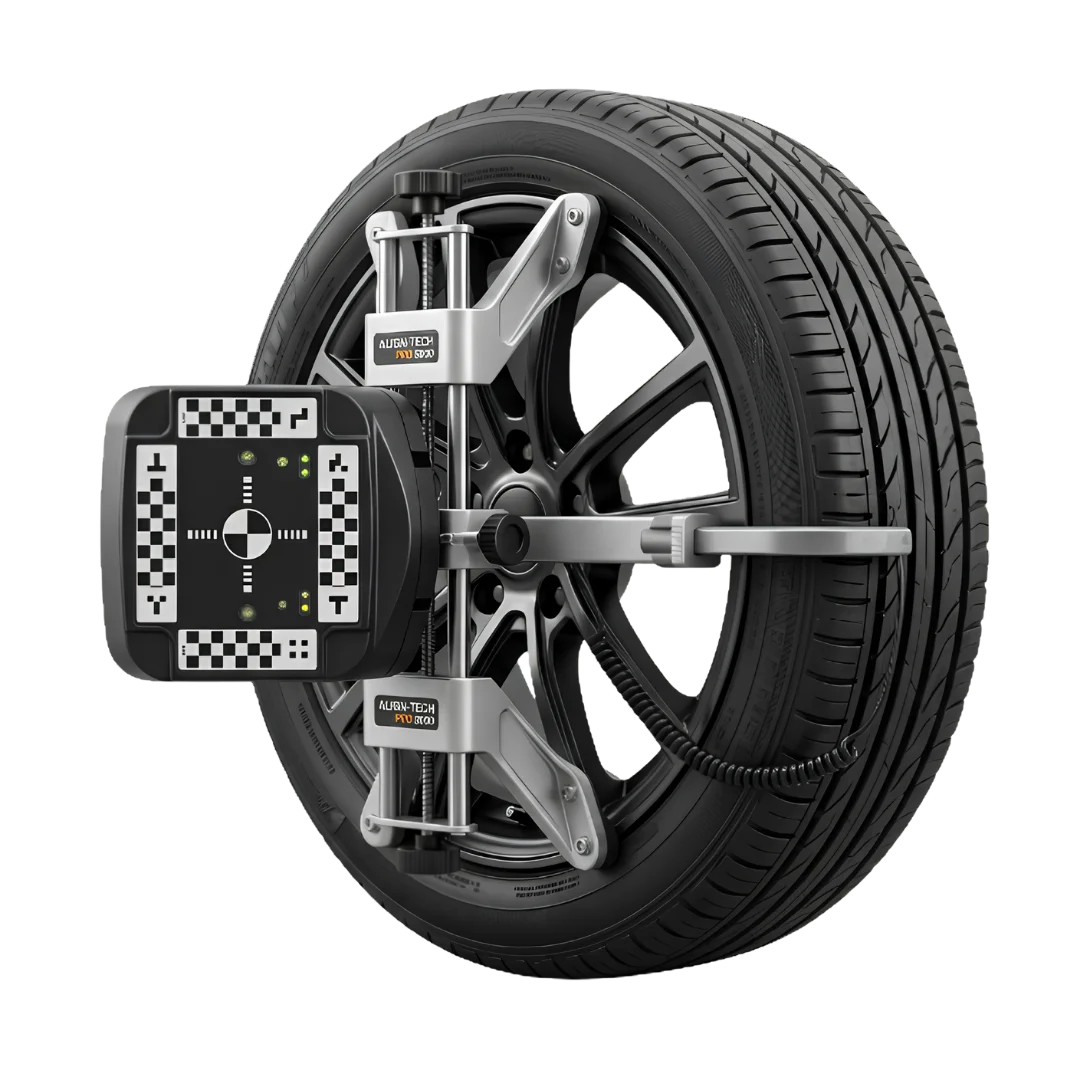
Wheel Alignment Check
Camber, caster, and toe get measured against Audi's factory figures, since a new set of tyres wears unevenly fast on a misaligned car.
Puncture Repair
Punctures within the central tread zone get plugged and patched from the inside, following the two-step method rather than just an external plug.
TPMS Sensor Service and Reset
Sensors get checked and replaced where the battery has failed, then relearned through Audi's MMI system, so the dash reads live pressure correctly.
Run-Flat Tyre Replacement
SSR-marked run-flat tyres get replaced as a pair or full set where wear or damage affects handling balance across the axle.
Wheel Bolt Torque Service
Every bolt gets torqued to Audi's specified figure for that wheel type, checked with a calibrated torque wrench, not an impact gun alone.
Nitrogen Inflation
Tyres get filled with nitrogen on request, holding pressure more consistently across Abu Dhabi's wide daily temperature swing than compressed air.
Seasonal Tyre Storage
Removed tyres get cleaned, tagged, and stored in a temperature-controlled area, staying ready to refit without re-balancing where wear allows.
Spare Wheel and Tyre Check
The space-saver or full-size spare gets checked for pressure and condition, since it is often ignored until the day it is actually needed.
Valve Stem and Cap Replacement
Valve stems harden and crack with age and heat, so we replace them with every new tyre fitting rather than reusing them on principle alone.
Why us
Why Choose Zenfo Auto Services for Audi Tyre Change
Spec Matched Exactly
We pull the load index and speed rating from your VIN plate, never guessing it from the tyre that happens to be on the car.
AO Fitment Available
We stock Audi-approved AO tyres for models that specify them, keeping the ride and handling feel Audi actually tuned that car for.
Torque Verified Always
Wheel bolts get torqued to Audi's exact figure with a calibrated wrench, then rechecked after a short road test.
Balance Confirmed by Machine
Every wheel gets balanced on computer equipment, never judged by hand, before it goes back on the car.
TPMS Correctly Relearned
Sensors get relearned through Audi's own MMI procedure, so the dash pressure reading matches the tyre, not a stale figure.
Written Fitting Warranty
Tyre fitting, balancing, and torque work all carry a written guarantee, so a fault traced to the fitting comes back to us, not to you.
Abu Dhabi climate
Why Abu Dhabi Conditions Are Harder on Audi Tyres
Sustained high road-surface temperature
Asphalt surface temperature can run well above the air temperature in summer, softening tread compound and speeding up wear.
Extended highway speeds
Long stretches of highway driving push more heat cycling through the tyre than the same distance in slower city traffic.
Sand and grit on road shoulders
Fine sand on the road surface acts like an abrasive, wearing tread down faster than the tyre's rated mileage assumes.
Large daily temperature swings
Pressure drops as temperature falls overnight, so a tyre set correctly at midday can sit under-inflated by morning without regular checks.
Kerb strikes in tight parking
Low-profile tyres on most Audi models leave less sidewall cushion against a kerb, raising the risk of sidewall damage in dense parking areas.
Reference
Tyre Wear Pattern: What It's Telling You
Tyre wear leaves a clear record of what is happening underneath the car, and reading the pattern narrows the cause before the tyre even comes off.
Wear pattern
Likely cause
Wear concentrated on both outer edges
Chronic under-inflation below the specified pressure
Wear concentrated in the centre only
Chronic over-inflation above the specified pressure
Wear on one edge only, front tyres
Camber or toe alignment fault
Cupping or scalloped wear around the tread
Worn suspension component, often a shock absorber
Feathering, tread edges angled one direction
Toe misalignment
Rapid wear on one tyre only
Brake caliper dragging or wheel bearing fault
Flat spot in one area of the tread
Wheel lock-up from harsh braking
A wear pattern on only one axle, front or rear, usually points to that axle's alignment rather than the tyre itself. Cupped or scalloped wear specifically traces back to a worn shock absorber, and fixing that through suspension repair is what stops the same wear from showing up again on the next set. Rapid wear on a single tyre, on the other hand, is usually a dragging caliper, and that's a job for brake pad replacement, not the tyre itself.
8 stages
How We Change and Fit Your Audi Tyres
01
Condition Assessed First
Tread depth, sidewall condition, and wear pattern get checked across all four tyres before any recommendation is made, since a pattern often points beyond the tyre itself.
02
Correct Spec Confirmed
Your VIN plate figure gets checked against the tyre currently fitted, since a downgraded load index from a previous shop is a common finding at this stage.
03
Old Tyre Removed
A rim-safe machine takes the old tyre off without marking Audi's alloy wheel finish, keeping the bead area clean for the new seal.
04
New Tyre Fitted
The replacement tyre gets mounted and seated on the rim, then inflated to Audi's specified pressure for that exact axle position.
05
Wheel Balanced Precisely
Computer balancing equipment spins the wheel at speed, and weights get placed on the rim until the reading holds steady at zero.
06
TPMS Sensor Checked
Each sensor gets tested for signal strength and battery condition, replaced where needed, then relearned to the vehicle through Audi's MMI system.
07
Bolts Correctly Torqued
Sequence matters here, so bolts get tightened in Audi's specified pattern, with the final figure checked using a calibrated wrench, not a gun.
08
Final Road Test
The car gets driven at highway speed to confirm zero vibration, and bolts then get rechecked one more time before the car is handed back.
Owner tips
Getting the Full Life Out of Your Audi's New Tyres
New tyres need a short break-in period, building up grip slowly before they hold the road the way they will for the rest of their life. A few simple habits protect that investment, and tread condition matters as much on the other side of a sale: tyre age and wear always get logged during an Audi pre-purchase inspection, since they reveal a lot about how a car was actually driven.
Avoid hard braking for the first 100km
A light mould-release layer sits on new tread until it wears off, so grip builds gradually over this distance through normal driving.
Check pressure monthly, not just at service time
Pressure drops naturally over weeks, and Abu Dhabi's temperature swings speed that up, so a monthly check catches drift before it affects wear.
Rotate tyres every 10,000km
Front and rear tyres wear at different rates on most Audi models, and rotation on schedule evens that wear out across the full set.
Avoid kerb contact while parking
Low-profile tyres have less sidewall cushion, so that a firm kerb strike can damage the casing even without an immediate flat.
Report any pull or vibration promptly
A new fault caught within the warranty period gets fixed as part of the job, not billed as a separate visit.
Free inspection slot
Book Your Audi Tyre Change in Abu Dhabi
Send your tyre size from the sidewall, or your VIN, and we will confirm the correct load index and speed rating before you book. A wheel refitted to spec should hold zero vibration at highway speed, not just feel smooth at walking pace in the workshop. Book online, or call Zenfo Auto Services for a tyre check this week.
The tyre placard inside the driver's door jamb lists the exact size, load index, and speed rating your model was built for. This figure takes priority over whatever size happens to be fitted right now.
02
AO marks a tyre Audi validated specifically for that model, matching the ride, noise, and handling feel engineered into the car. A non-AO tyre in the same size still fits, but the driving feel can differ.
03
No, an SSR-marked run-flat tyre driven while flat needs replacement, not repair. The reinforced sidewall supports the car's weight without air, and that structure gets compromised once it has run flat, even briefly.
04
Audi tyres should be rotated every 10,000km, since front and rear positions wear at different rates depending on the drivetrain and suspension setup.
05
Nitrogen holds pressure more consistently across temperature swings than compressed air, which matters in Abu Dhabi's wide day-to-night range. Regular air still performs safely if checked more often.
06
A TPMS light staying on after a tyre change usually means the sensor was not relearned to the vehicle. Audi's MMI system needs that step run explicitly after any tyre or sensor work.
07
Fitting a correctly specified tyre and torquing bolts to Audi's figure keeps the manufacturer warranty intact under UAE consumer law. The key factor is that load index and speed rating match the original specification.
08
A four-tyre change with balancing and an alignment check typically takes 90 minutes to 2 hours. A single tyre replacement with a TPMS relearn usually finishes within 45 minutes.








 Audi specialist service