
Timing Belt Kit Replacement
The complete kit goes in as one matched set: belt, hydraulic tensioner, idler pulleys, water pump, and seals, sourced from INA, SKF, or Gates depending on the application.
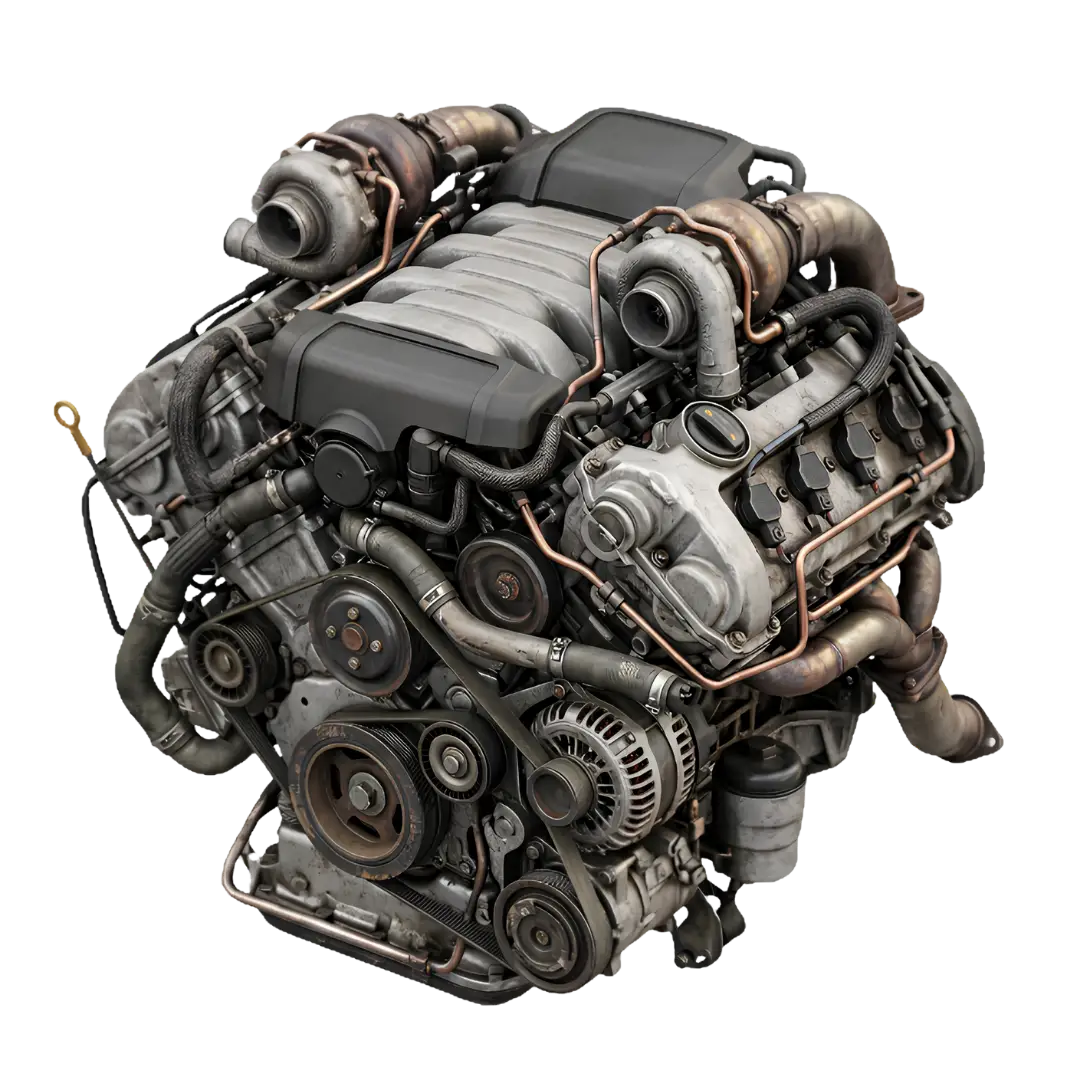 Engine Repair02
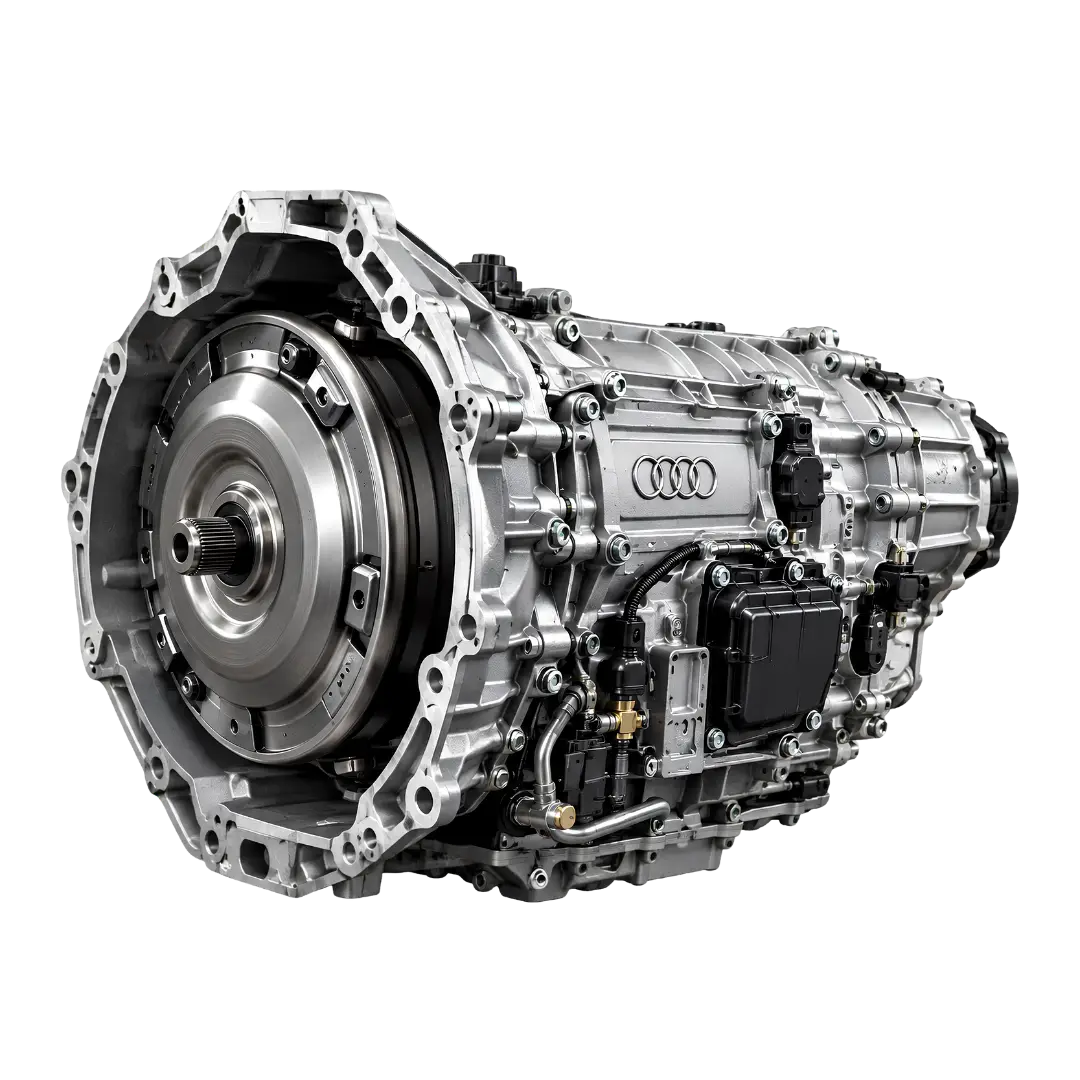 Transmission Repair03
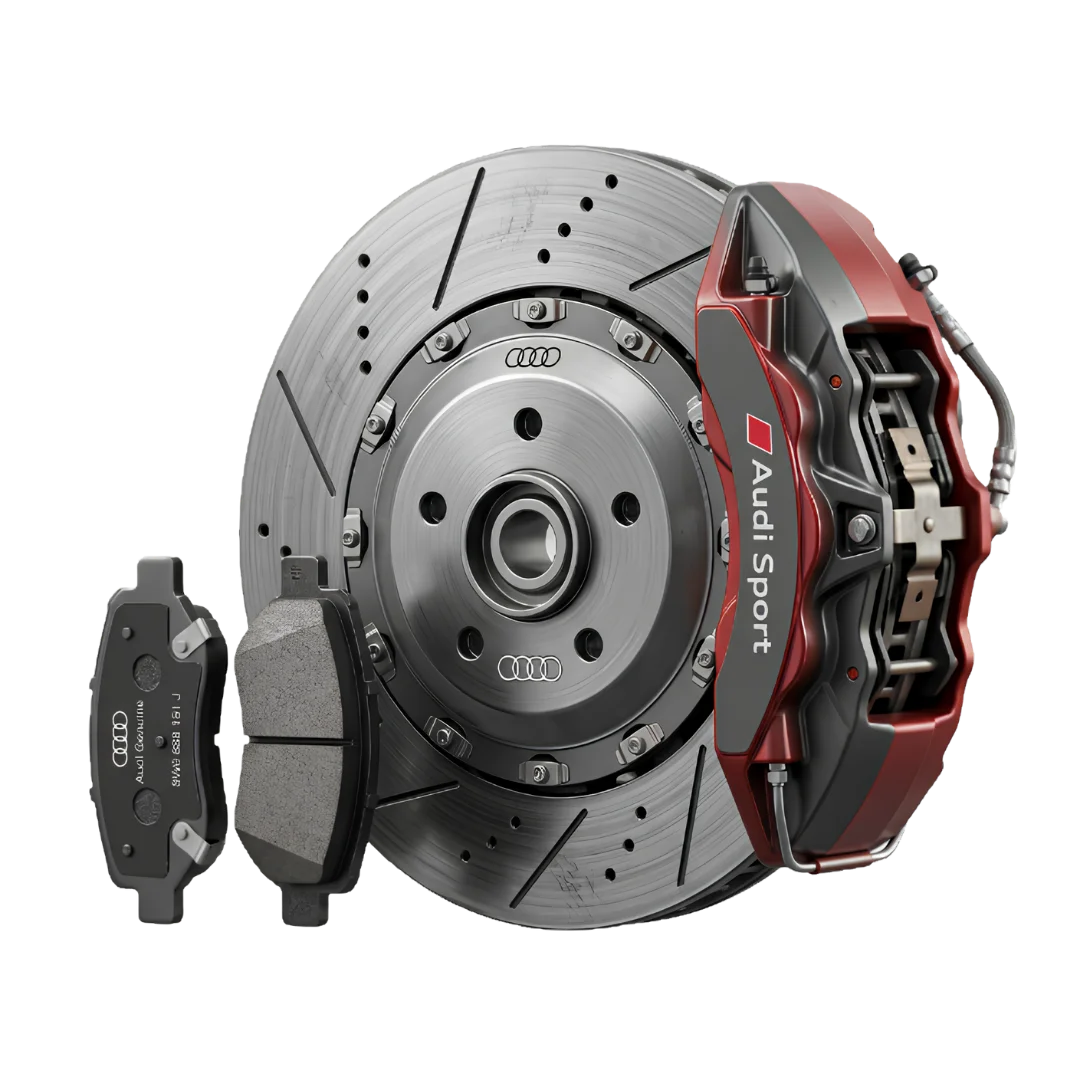 Brake Pads Replacement04
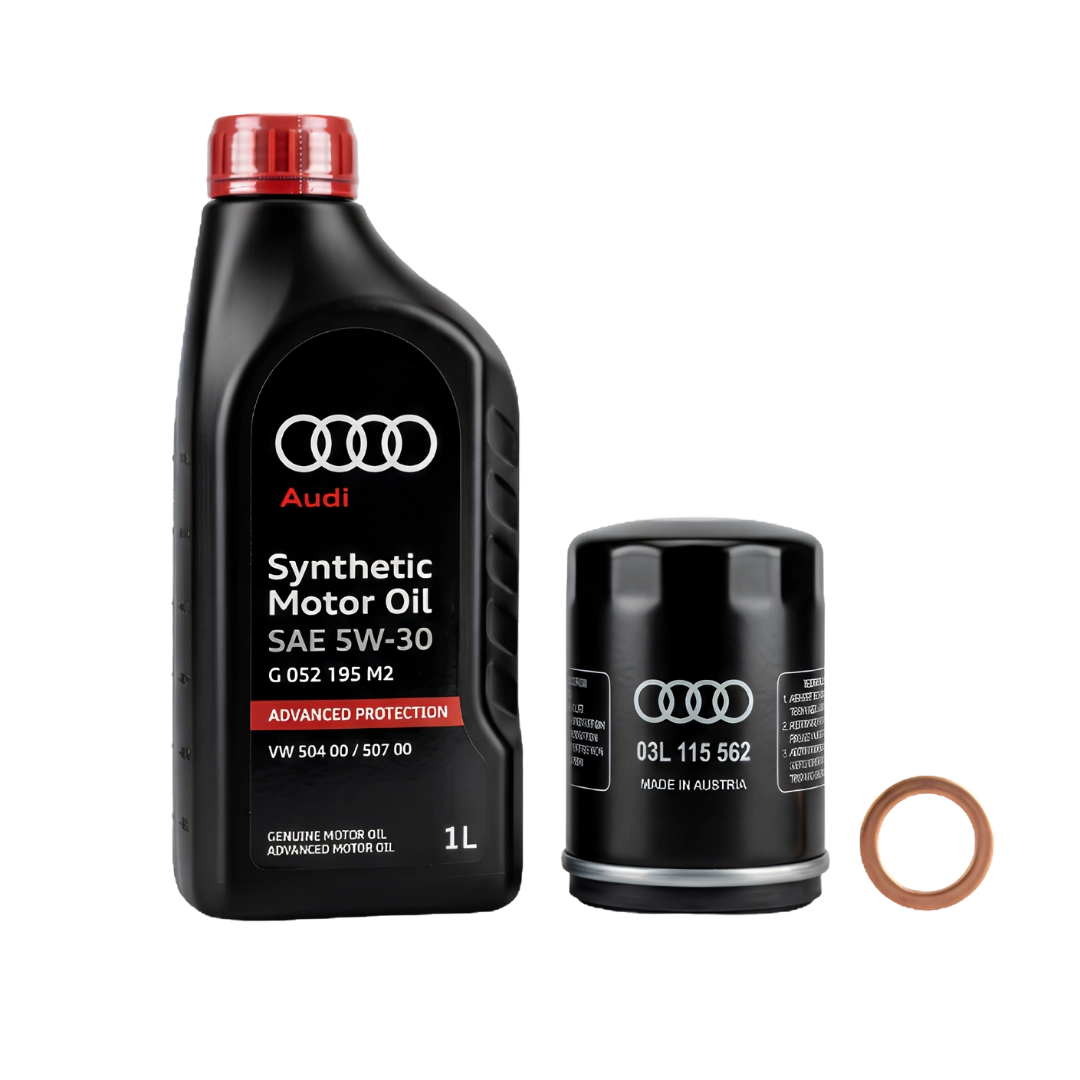 Oil Change05
 Suspension Repair06
 Car Electrical Repair07
 Body Paint08
 Pre Purchase Inspection09
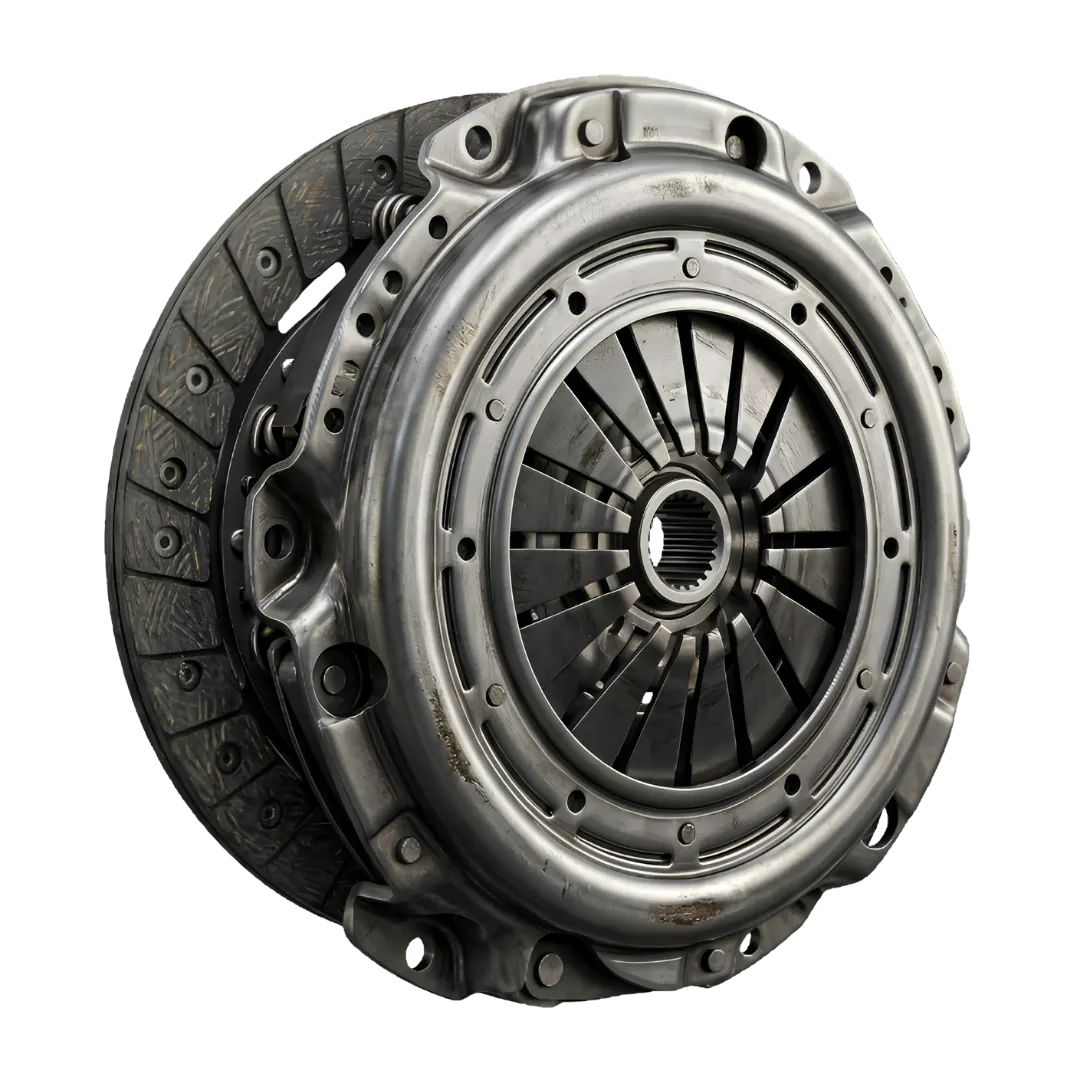 Clutch Replacement10
 Sanitisation11
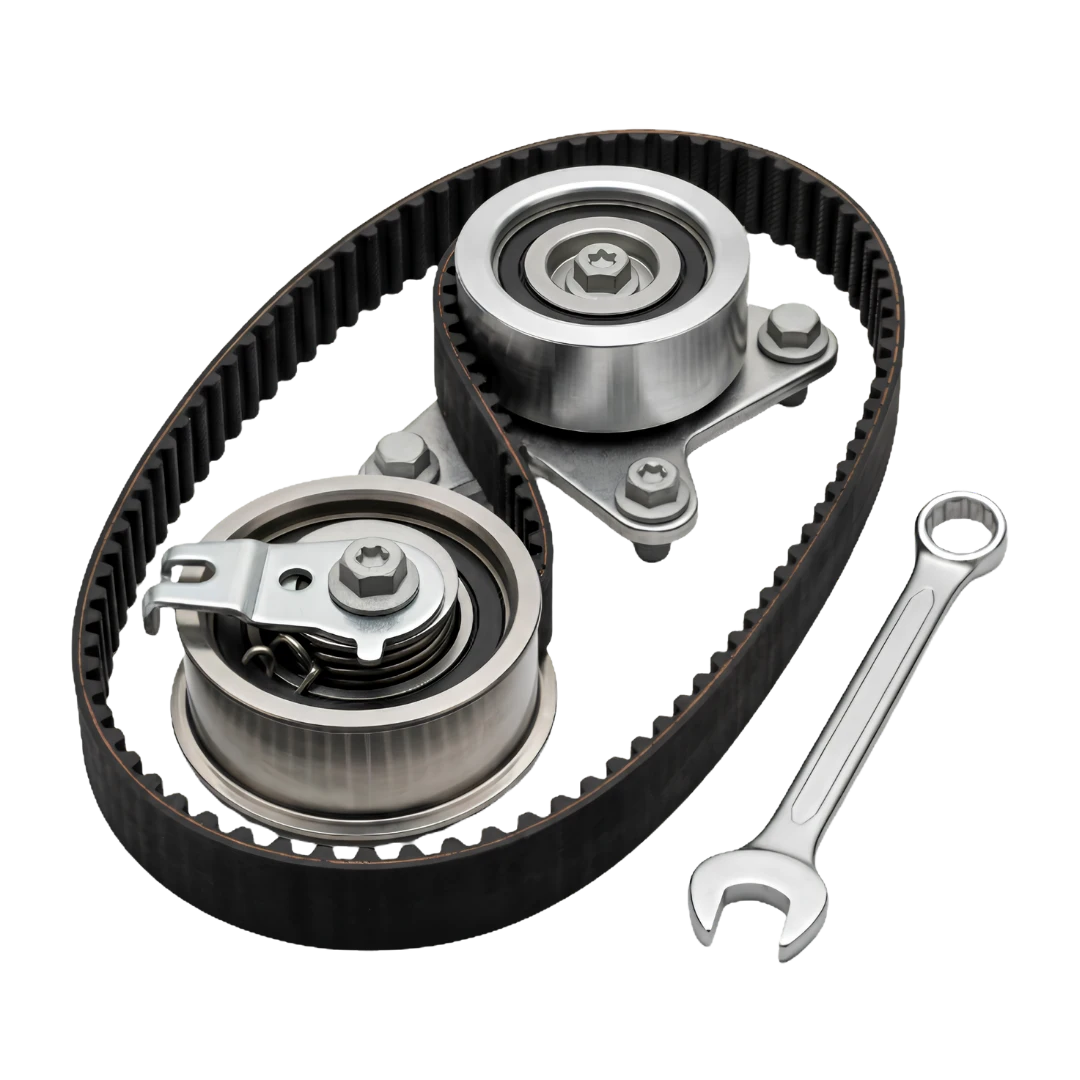 Timing Belt Replacement12
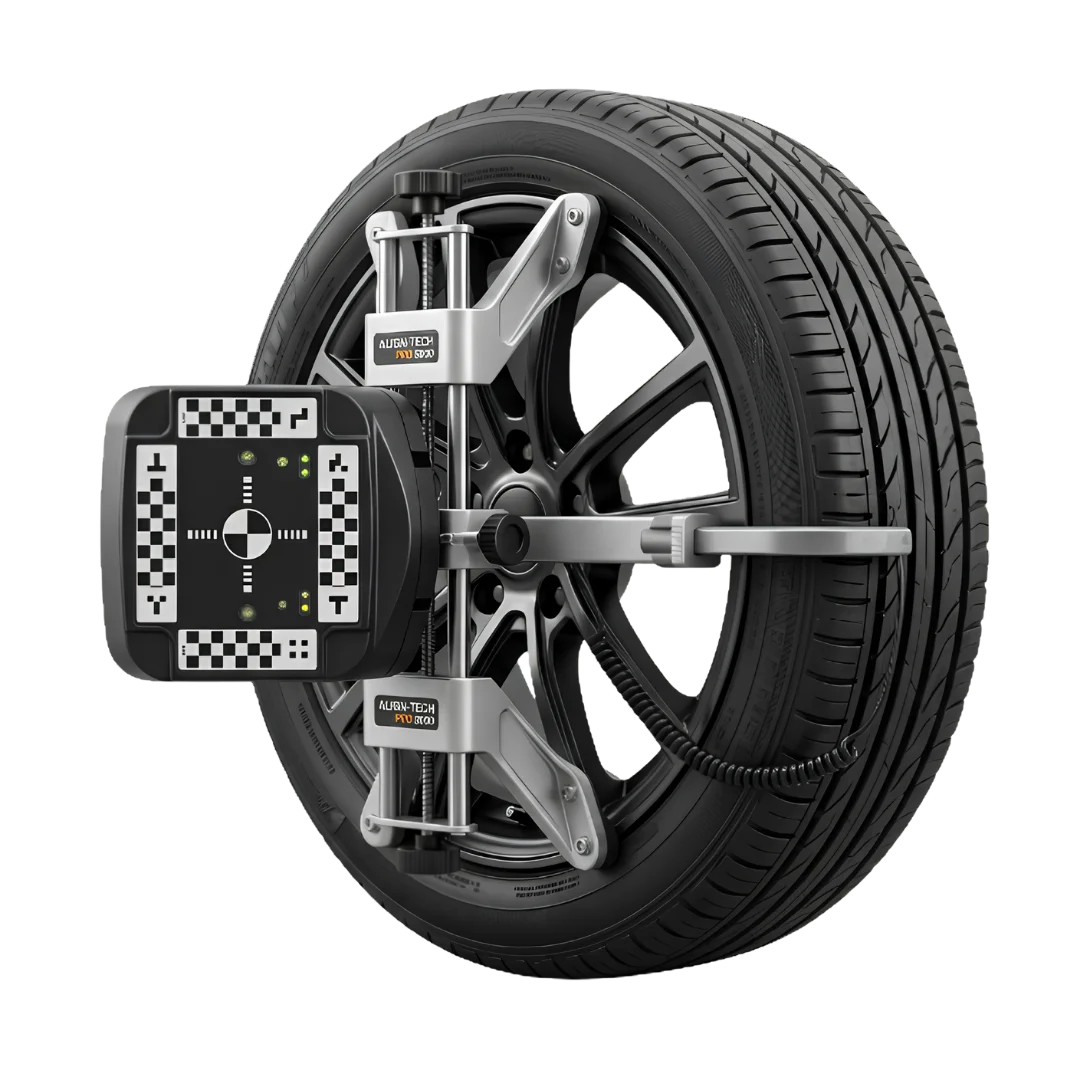 Wheel Alignment13
 Window Tinting14
 Windshield Replacement15
 Gear Repair16
 Body Shop17
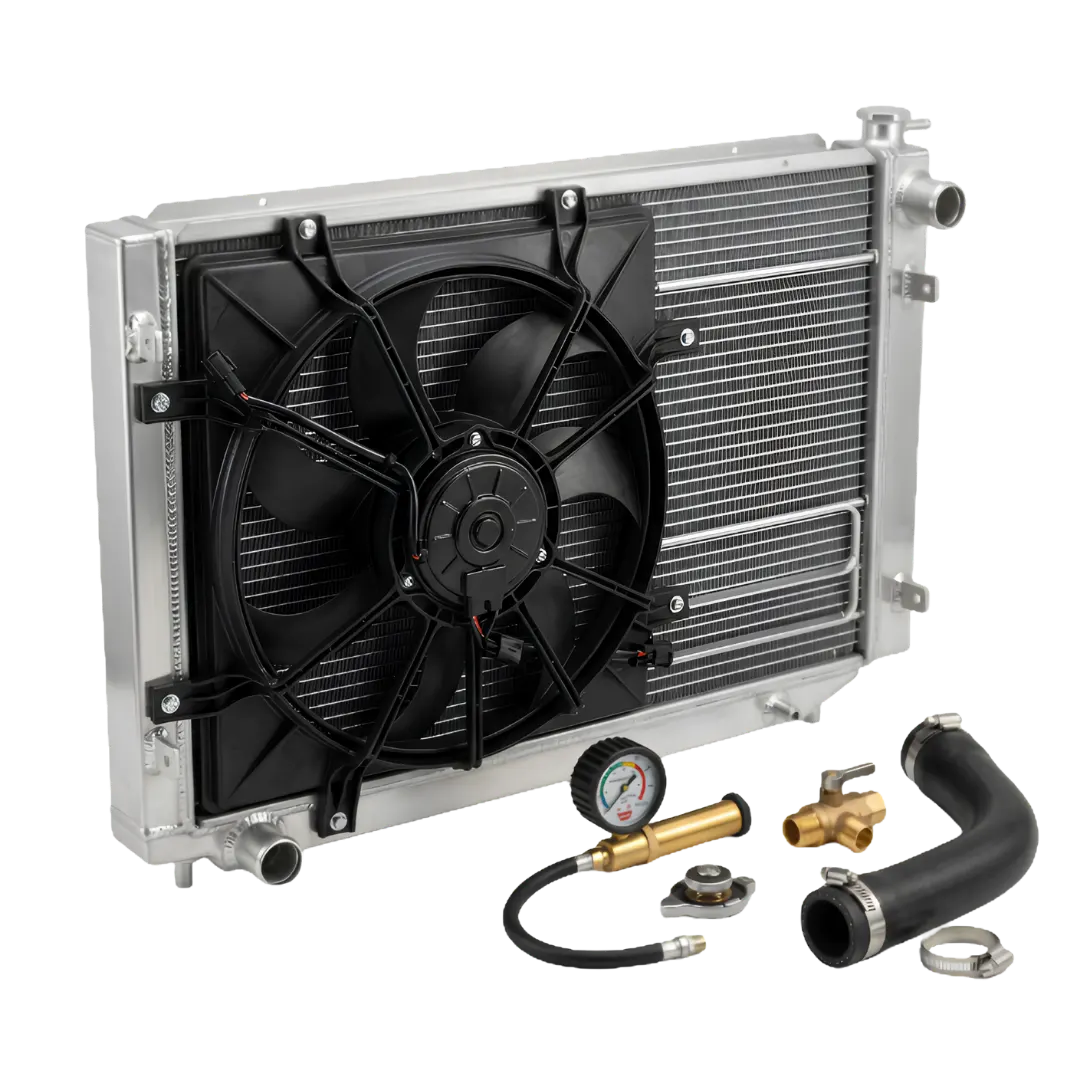 Radiator Repair18
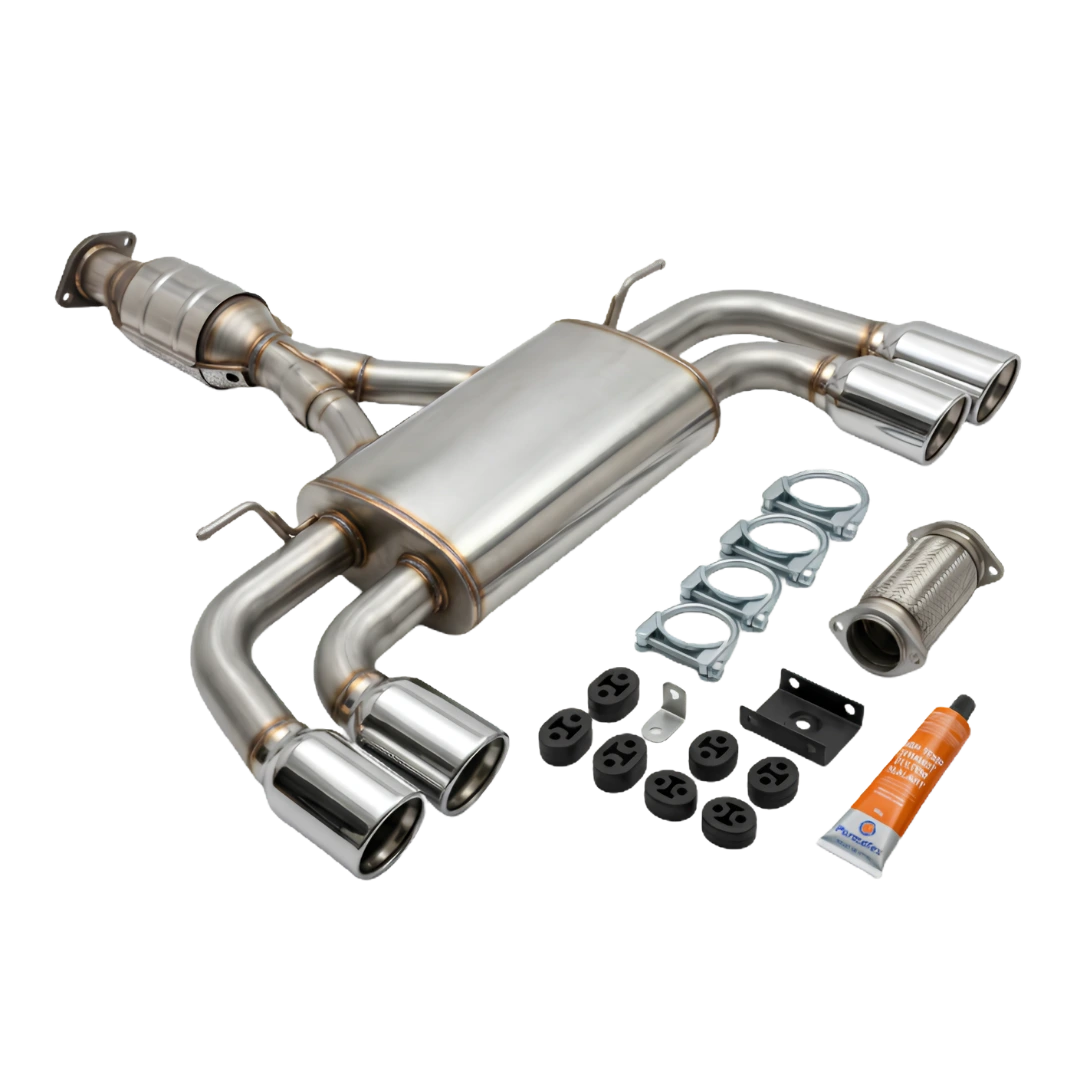 Exhaust Repair19
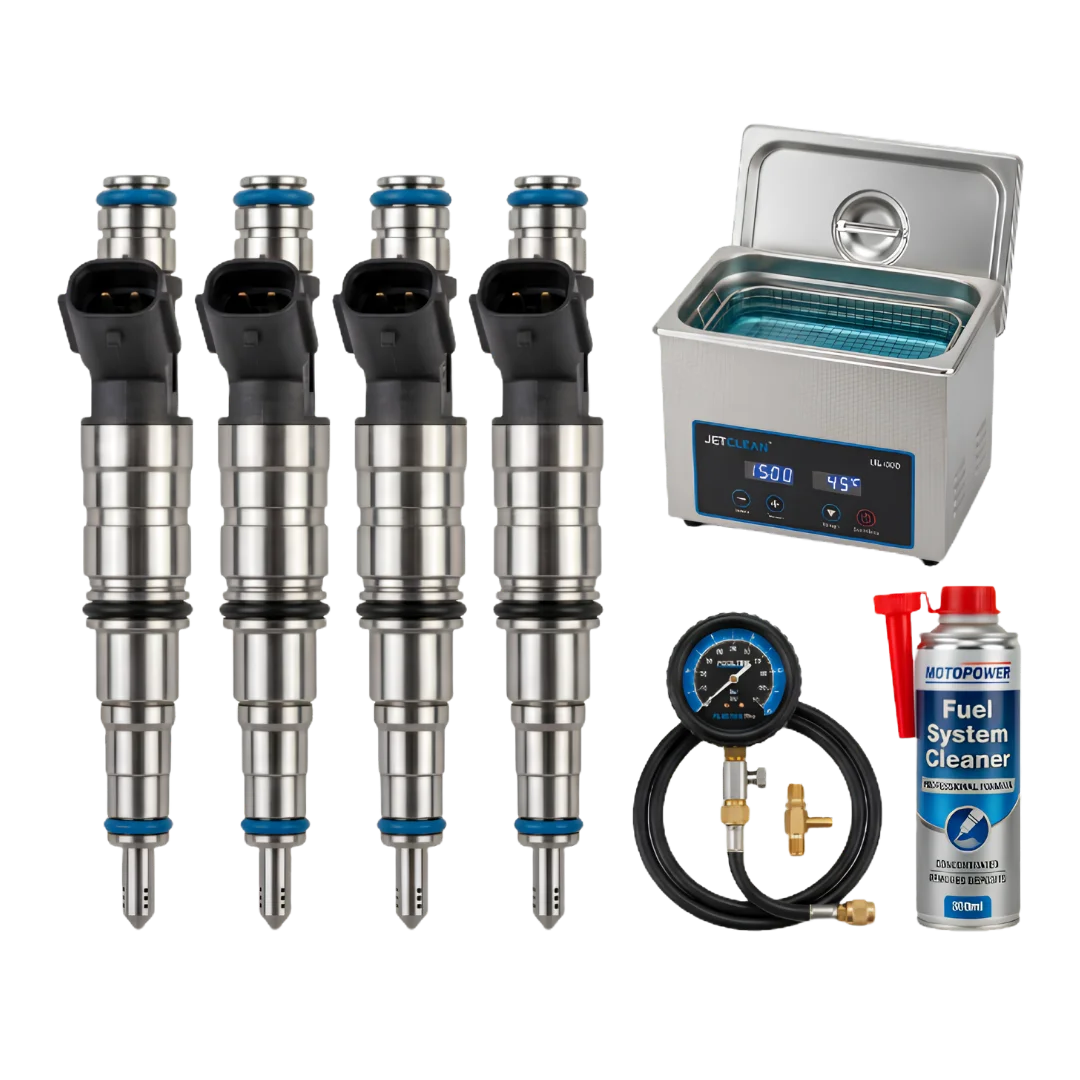 Injector Cleaning20
 Car Wash21
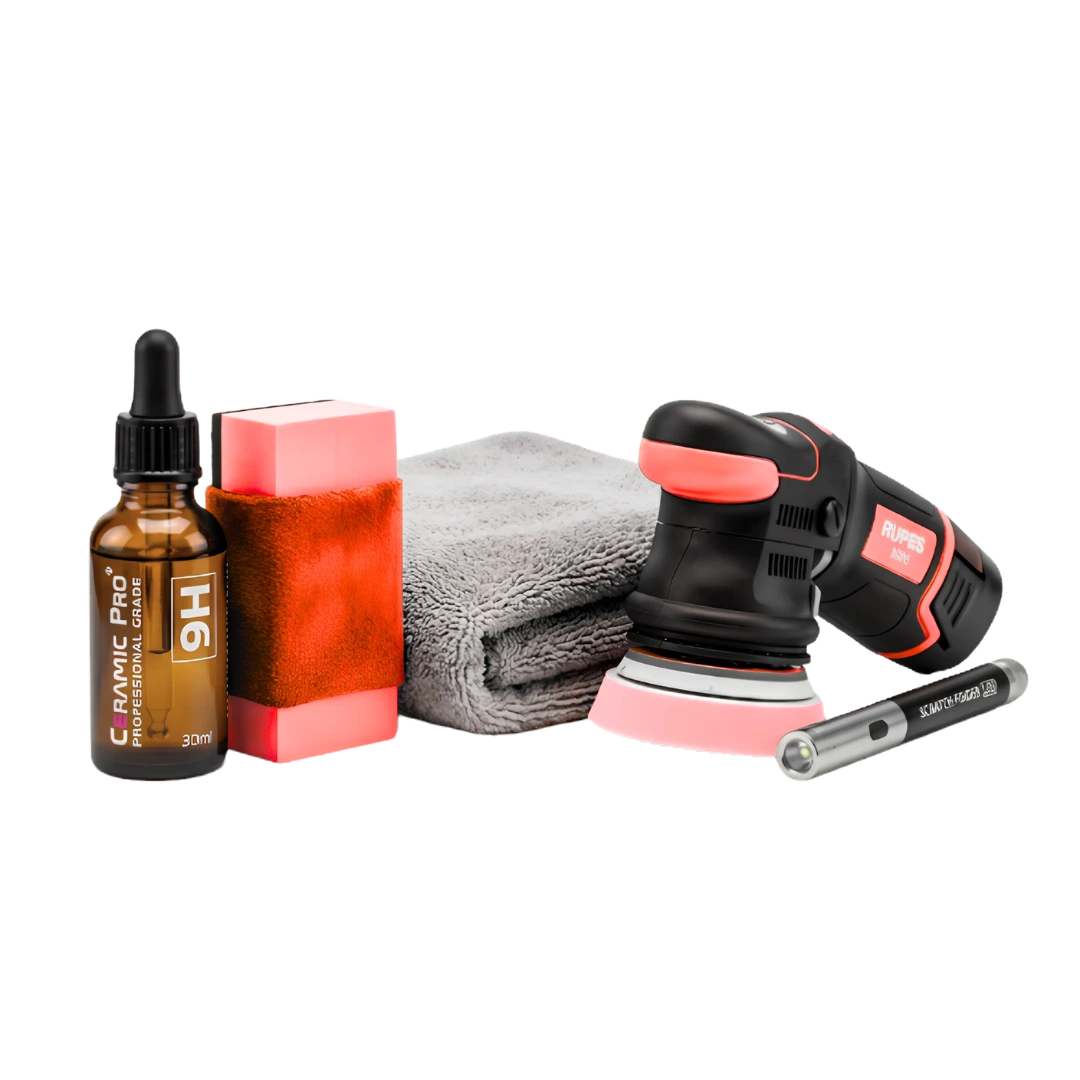 Ceramic Coating Service22
 Upholstery Service23
 Car Tyre Change24
 Car Steering Repair
 Audi specialist service
Zenfo Auto Services replaces Audi timing belts in Abu Dhabi as a complete kit: glass fibre-reinforced belt, hydraulic tensioner, idler pulleys, and water pump fitted together. Every Audi belt-driven engine is an interference design, so a snapped belt bends valves within roughly two crankshaft revolutions, with no warning light to predict it.
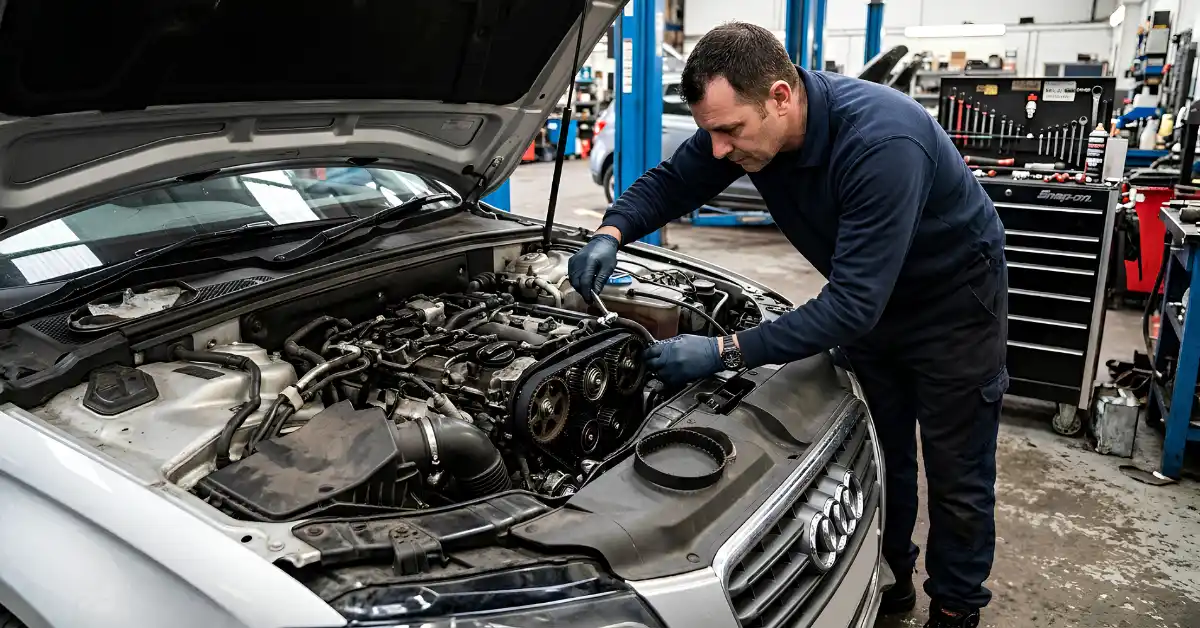
A timing belt rarely warns before it snaps, but five observations raise the urgency.
The factory schedule is the primary trigger, and exceeding it by even a few thousand kilometres adds risk that cannot be measured from outside.
Rubber compounds harden and crack with age regardless of distance, and Abu Dhabi heat accelerates that degradation significantly.
A second-hand Audi with no documented belt change should be treated as overdue until proven otherwise.
Weeping around the pump shaft indicates bearing wear inside a component driven by the belt itself.
A tensioner losing hydraulic pressure allows the belt to flutter, which produces a rhythmic noise at idle.
Belt work branches into 12 service types depending on what the engine needs and what condition exposes.
The complete kit goes in as one matched set: belt, hydraulic tensioner, idler pulleys, water pump, and seals, sourced from INA, SKF, or Gates depending on the application.
The pump impeller, shaft bearing, and gasket are renewed during every belt job, since a seized pump destroys the new belt as effectively as the old one failing.
Coolant is already drained for the water pump, so the thermostat and its housing are renewed at the same labour cost rather than as a separate future visit.
The serpentine belt driving the alternator, air conditioning compressor, and power steering pump is removed to access the timing belt. Renewal at the same time costs only the part.
Oil seeping past this seal softens timing belt rubber and accelerates tooth wear. Access only exists with the crankshaft pulley removed, which the belt job already requires.
Cam seals sit behind the timing belt pulleys and weep oil onto the belt path. Replacing them during belt work catches leaks before they cause premature belt degradation.
Hydraulic tensioners with leaking seals are replaced, never repaired. A failed tensioner allows belt slack that jumps teeth under sudden deceleration or cold start conditions.
Seized or rough bearings inside idler pulleys generate enough friction to melt belt material locally. Replacement is non-negotiable during a complete kit installation.
Cars arriving with unknown history receive a visual and tactile belt inspection, checking for cracking, tooth wear, edge fraying, and surface contamination before advising on replacement timing.
Engines that arrive with jumped timing receive diagnosis, belt removal, and precise retiming using factory locking tools, then a compression test to confirm no valve damage occurred.
A snapped belt triggers a full cylinder head inspection: compression test, leak-down test, and borescope examination of valve faces and piston crowns to determine repair scope.
Chain-driven Audi engines arriving for other work receive a chain tensioner and stretch check through camshaft-to-crankshaft correlation data, since this service overlaps with belt-equipped models in the workshop.
A timing belt job is judged by whether the cam-to-crank phase relationship lands exactly where the ECU expects it, and that outcome is decided before the engine ever starts.
Belt width, tooth pitch, tooth count, and tensioner variant are confirmed against your engine code through VAG parts data. A belt one tooth pitch out of specification still fits the pulleys but throws valve timing off enough to trigger misfire codes.
Pin and plate tools specific to each Audi engine family lock the crankshaft at TDC and the camshafts against the cylinder head. Improvised stops or drill bits used as substitutes are the leading cause of one-tooth timing errors on jobs done outside a specialist workshop.
After fitting, the crankshaft is rotated through two complete revolutions by hand and the locking tools reinserted to confirm zero tooth deviation. This single check catches the majority of timing faults before the ignition key is ever turned.
Once started, live diagnostic data captures the angular relationship between camshaft and crankshaft position sensors, expressed in degrees of rotation. A phase reading outside tolerance signals a sub-tooth error invisible to mechanical inspection alone.
The tensioner plunger is loaded to its specified preload before the belt is released, following the torque and rotation sequence in the workshop manual. Under-tensioning allows tooth jump under load; over-tensioning accelerates bearing wear in the idler pulleys.
The pump is renewed on every belt job without exception, since roughly 95 percent of VAG belt-driven engines spin the impeller off the timing belt itself. A seized shaft bearing locks the belt as effectively as a snapped tooth.
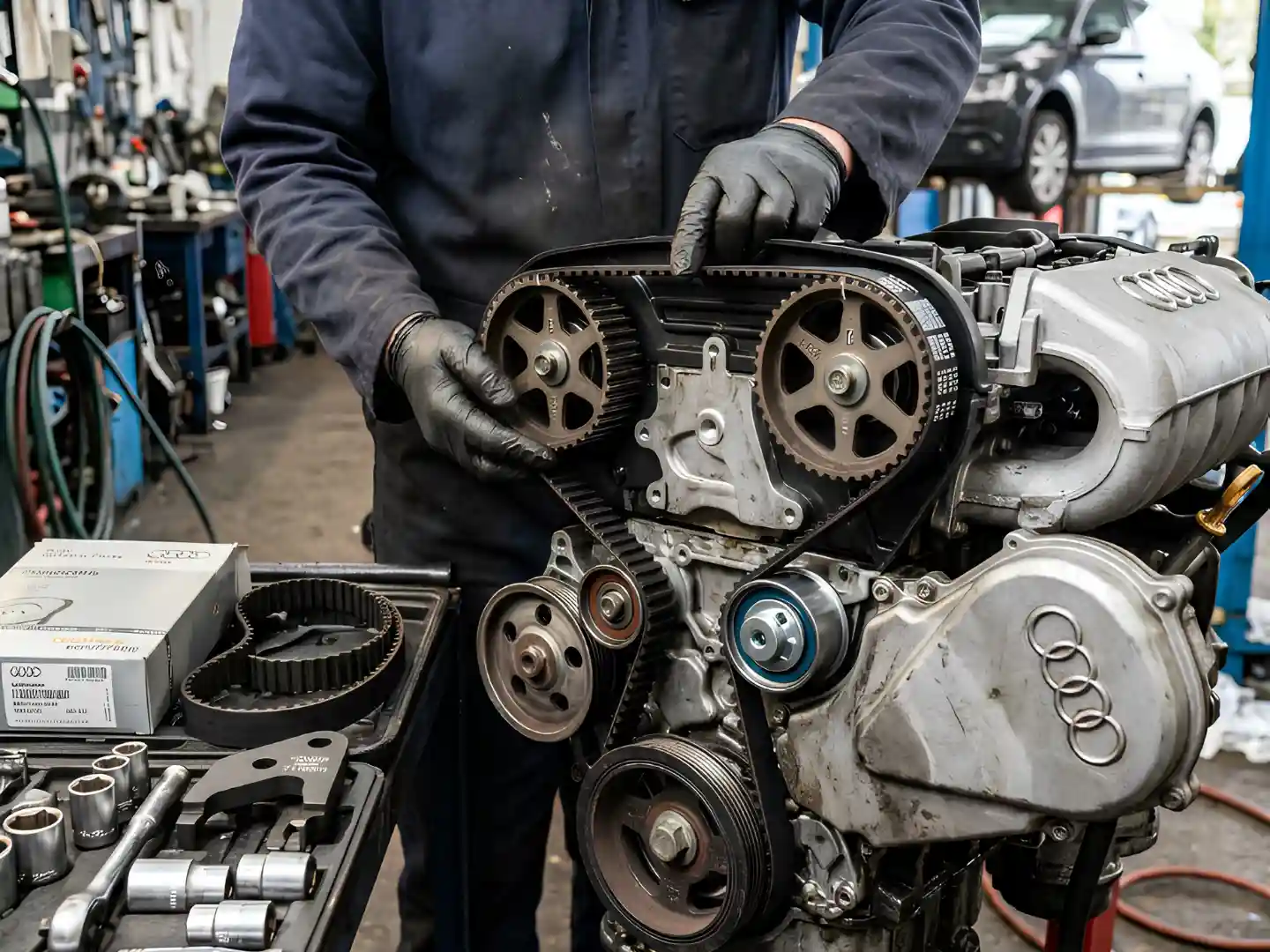
Timing belts are engineered to survive a defined temperature and stress envelope, and Abu Dhabi sits outside that envelope for most of the year.
HNBR compounds used in modern timing belts harden and lose elasticity as heat breaks polymer chains, with degradation accelerating above 40°C sustained.
The hydraulic tensioner relies on an internal oil seal that hardens in high ambient temperatures, reducing damping and allowing belt flutter.
Stop-start driving in summer pushes coolant above 100°C repeatedly, which thermally cycles the water pump seal sitting against the belt path.
Sealed bearings in idler pulleys contain grease rated for a temperature range that Abu Dhabi exceeds for five months of the year.
Heat combined with fine dust creates a polished surface on belt teeth that reduces grip on the pulley, increasing the chance of tooth jump.
Even winter mornings here rarely drop below 15°C, so belts never experience the cold contraction that redistributes material stress.
Audi fits timing belts to specific engine families. Others run timing chains, which follow a different service pattern. Knowing which system your engine uses prevents both unnecessary work and dangerous neglect.
| Engine | Type | Cam drive | Interference |
|---|---|---|---|
| 1.6 MPI | Petrol | Belt | Yes |
| 1.8 T (EA113) | Petrol | Belt | Yes |
| 2.0 FSI | Petrol | Belt | Yes |
| 2.0 TFSI (EA888) | Petrol | Chain | Yes |
| 3.0 TFSI supercharged | Petrol | Chain | Yes |
| 3.2 FSI V6 | Petrol | Chain | Yes |
| 4.0 TFSI V8 | Petrol | Chain | Yes |
| 1.9 TDI | Diesel | Belt | Yes |
| 2.0 TDI (most generations) | Diesel | Belt | Yes |
| 2.7 TDI V6 | Diesel | Belt and chain | Yes |
| 3.0 TDI V6 | Diesel | Belt and chain | Yes |
The 2.7 and 3.0 TDI V6 engines use a belt for the main camshaft drive and a secondary chain at the rear of the block. Both require attention, though at different intervals.
Audi publishes intervals by engine code and chassis, not by a single blanket figure. The table below covers the most common belt-driven engines in the UAE market.
| Engine | Factory interval | Our Abu Dhabi recommendation |
|---|---|---|
| 1.8 T (EA113) | 120,000 km or 5 years | 100,000 km or 4 years |
| 2.0 FSI | 120,000 km or 5 years | 100,000 km or 4 years |
| 1.9 TDI | 120,000 km or 5 years | 100,000 km or 4 years |
| 2.0 TDI (earlier CR engines) | 120,000 km or 5 years | 100,000 km or 4 years |
| 2.0 TDI (later CR engines) | 210,000 km or 5 years | 150,000 km or 4 years |
| 2.7 TDI V6 | 120,000 km or 5 years | 100,000 km or 4 years |
| 3.0 TDI V6 | 120,000 km or 5 years | 100,000 km or 4 years |
Factory intervals assume European ambient temperatures. Rubber aging accelerates roughly twice as fast when sustained temperatures exceed 40°C, which is why our recommendation shortens the time limit to four years regardless of mileage.
Six stages, typically one full working day, and the engine is never started until cam timing is physically verified.
Your VIN identifies the exact engine code, which determines belt width, tooth count, tensioner type, and water pump variant before any part is ordered.
Auxiliary belt, pulleys, engine mount bracket, and timing covers are removed to expose the complete belt path without disturbing the cooling system more than necessary.
The crankshaft and camshaft are rotated to top dead centre and locked with pin or plate tools specific to your engine code, which prevents any valve contact during disassembly.
Belt, tensioner, idler pulleys, water pump, thermostat, and crankshaft seal are fitted together. The tensioner is loaded according to specification, and the belt routed with correct tooth alignment.
Locking tools are reinserted after two full crankshaft rotations by hand to confirm that valve timing has not shifted by a single tooth, since a one-tooth error causes running faults and possible damage.
The engine is started with live diagnostic data streaming. Camshaft and crankshaft position signals are checked for correct phase relationship, then the car is road tested under load before release.
Owners frequently confuse the two systems, and the distinction matters for both service cost and failure consequence.
A timing belt is a toothed rubber composite designed for scheduled replacement. It runs quietly, absorbs vibration, and requires no lubrication, but degrades with heat and age.
A timing chain is a metal roller chain bathed in engine oil and tensioned by a hydraulic guide. It is designed for the engine's lifetime, but tensioners and guides do wear, particularly on the EA888 2.0 TFSI where chain stretch and tensioner failure are well-documented faults.
The critical difference is failure mode. A belt snaps suddenly and completely, giving zero warning. A chain stretches gradually, rattles on cold start, and allows diagnostic detection through camshaft-to-crankshaft correlation values before catastrophic failure.
If your Audi uses a chain rather than a belt, the engine repair page on our site covers chain tensioner diagnosis and replacement separately.
A timing belt gives no warning before it breaks, and every Audi engine it drives is interference. Send your VIN and mileage, and we confirm the interval, the kit, and the price before you commit. Book Audi repair in Abu Dhabi online, or call Zenfo Auto Services for a slot this week.
Most four-cylinder belt jobs occupy one full working day. V6 TDI engines with rear-mounted secondary chains require additional time, and your advisor confirms the schedule after checking the engine code.
The water pump is renewed during every belt job here without exception. Roughly 95 percent of VAG belt-driven engines run the pump off the timing belt, and a seized pump shaft locks the belt instantly.
Valve-to-piston contact occurs within two crankshaft revolutions. The result is bent valves, cracked guides, and possible bore scoring. Repair involves removing and rebuilding the cylinder head at minimum.
The engine code determines the cam drive system. Most 2.0 TDI, 1.9 TDI, and older petrol engines use belts, while the EA888 2.0 TFSI, 3.0 TFSI supercharged, and 4.0 TFSI V8 run chains. Send your VIN, and we will confirm which your car uses.
Belts do not fail at a predictable mileage, and some survive well past their interval. However, the failure mode is total and sudden, and the damage is catastrophic on every Audi application. Gambling on extra kilometres risks the entire engine.
Independent replacement using approved parts keeps your manufacturer warranty intact under UAE consumer law. Kits sourced from INA, SKF, or Gates meet or exceed original equipment specifications.
The auxiliary belt must come off to reach the timing belt, so renewal adds only the cost of the part. Fitting a fresh serpentine belt during the same visit prevents a separate future labour charge.
They are the same component. Timing belt is the technical term; cambelt is the common name. Both describe the toothed rubber belt connecting the crankshaft to the camshaft.