
Injector Diagnostic Scan
We read fuel trims first. We also check cylinder contribution values and stored injector correction data. This shows which cylinders have a deviation before any physical work begins.
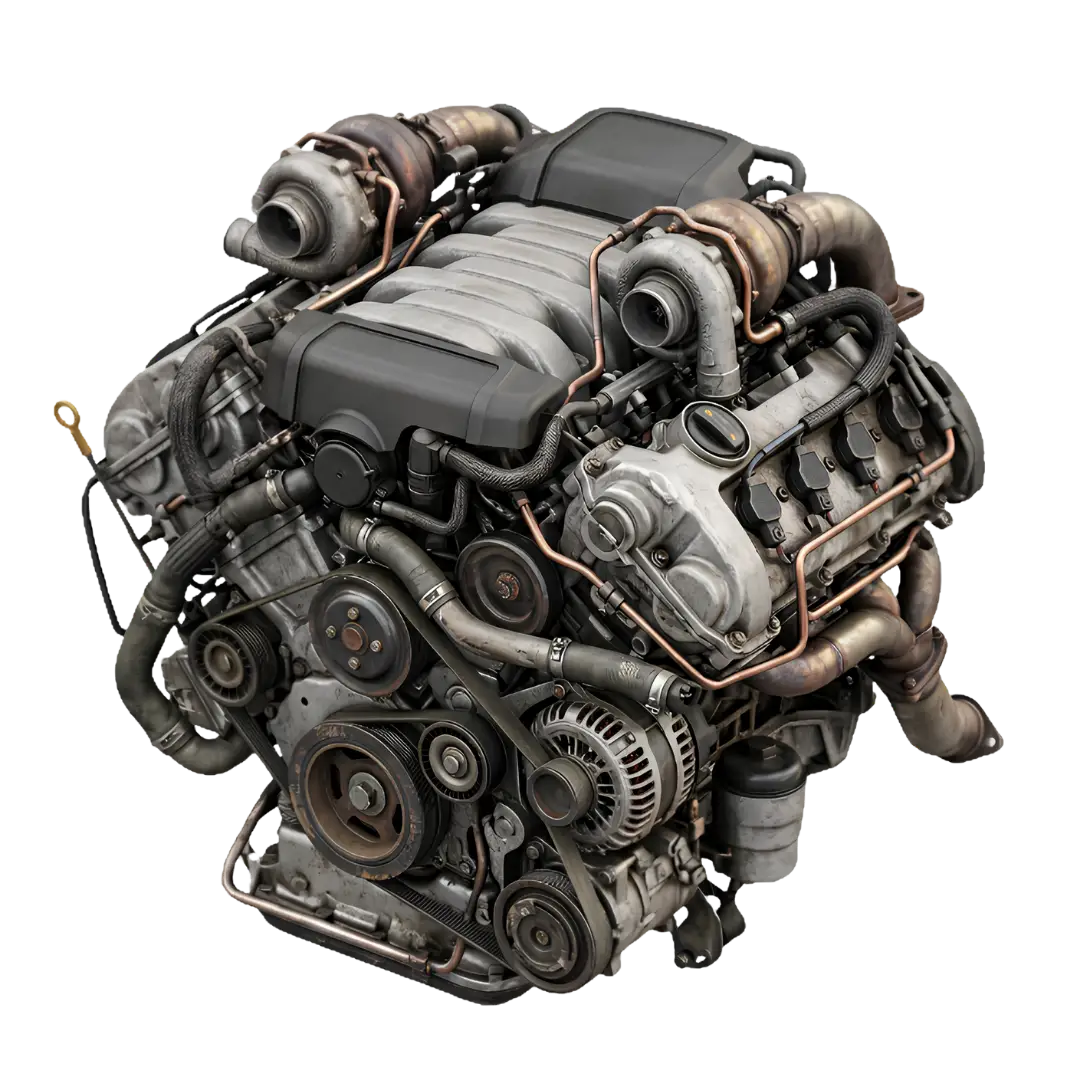 Engine Repair02
 Transmission Repair03
 Brake Pads Replacement04
 Oil Change05
 Suspension Repair06
 Car Electrical Repair07
 Body Paint08
 Pre Purchase Inspection09
 Clutch Replacement10
 Sanitisation11
 Timing Belt Replacement12
 Wheel Alignment13
 Window Tinting14
 Windshield Replacement15
 Gear Repair16
 Body Shop17
 Radiator Repair18
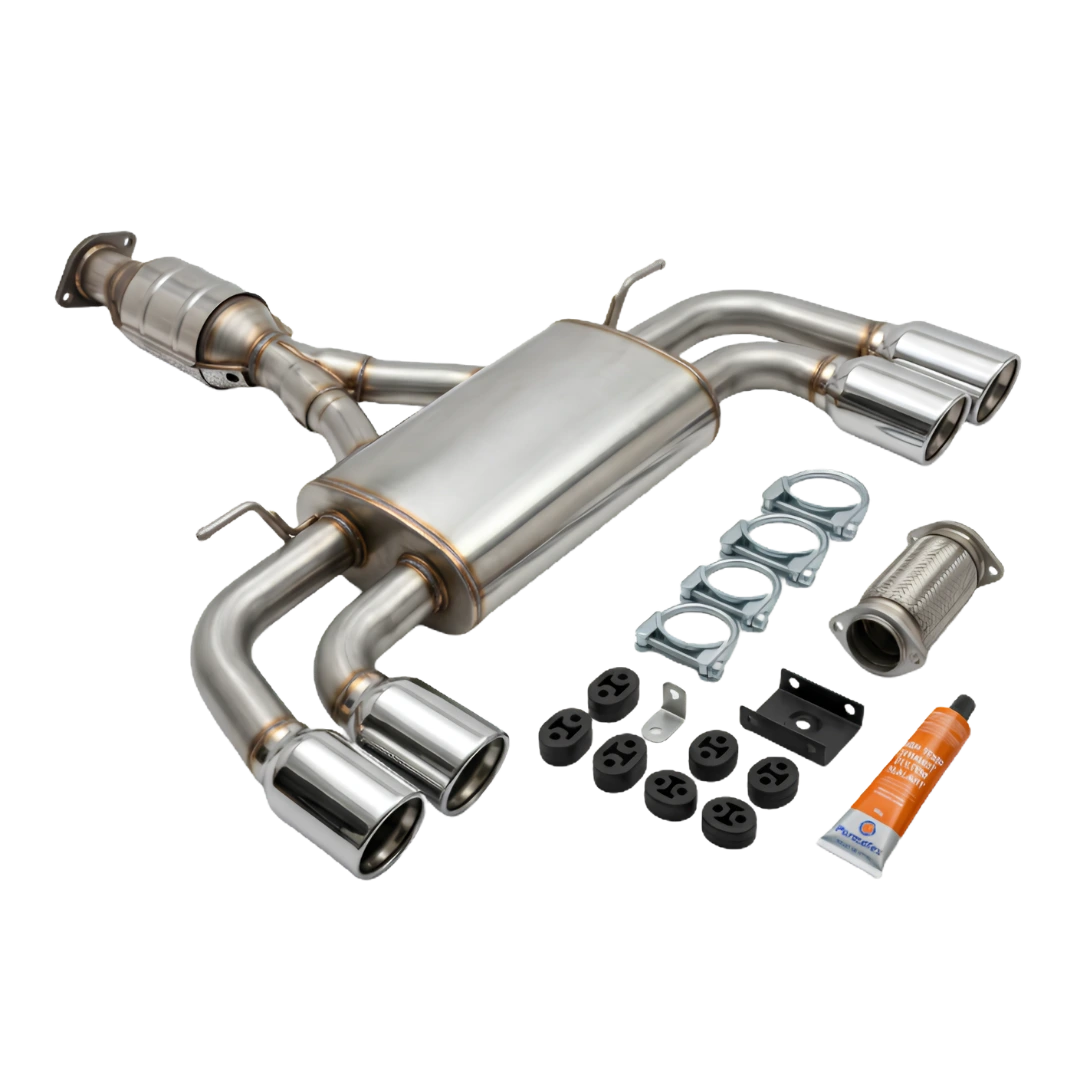 Exhaust Repair19
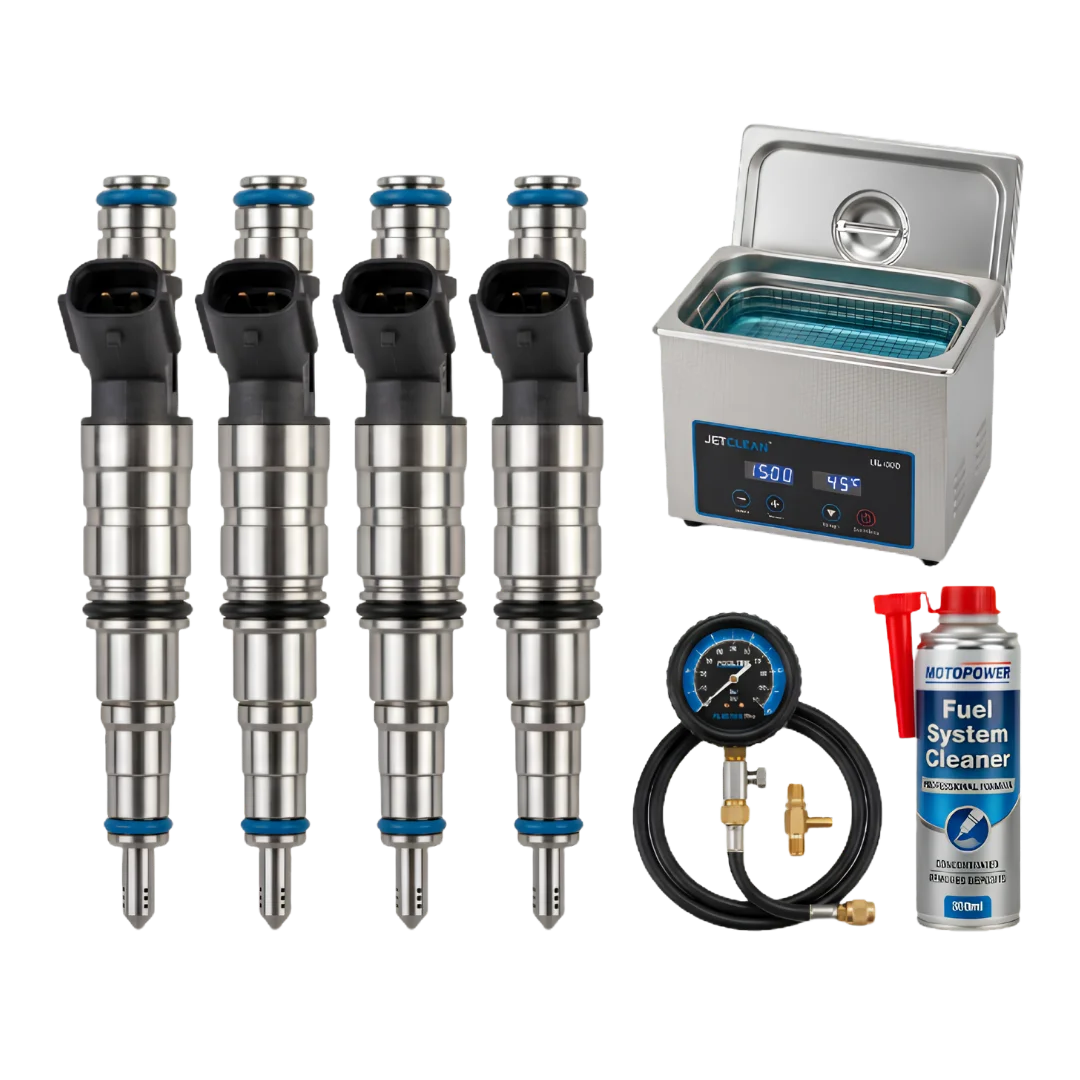 Injector Cleaning20
 Car Wash21
 Ceramic Coating Service22
 Upholstery Service23
 Car Tyre Change24
 Car Steering Repair
 Audi specialist service
Zenfo Auto Services cleans and tests Audi fuel injectors in Abu Dhabi. We cover TFSI petrol engines and TDI diesel engines. Each injector is flow tested against its group. This happens before and after cleaning. The same symptom can come from two very different injector faults.
A single underperforming injector shows up most clearly at idle. The engine has the least ability to hide an uneven cylinder here.
Uneven fuel delivery across cylinders becomes more noticeable under load. The engine needs precise, matched output from every injector at this point.
A leaking or over-fuelling injector wastes fuel directly. A restricted injector forces the engine management system to compensate elsewhere.
Diesel injectors rely on precise atomisation. They are sensitive to nozzle coking, which disrupts the spray pattern needed for a clean cold start.
Diesel injectors click audibly during normal operation. A change in that sound pattern can point to a mechanical injector fault.
Cylinder-specific misfire codes, or fuel trim values outside their normal range, point toward an injector problem on that cylinder.
We read fuel trims first. We also check cylinder contribution values and stored injector correction data. This shows which cylinders have a deviation before any physical work begins.
A controlled cleaning solution runs through the fuel system while the engine operates. This addresses moderate deposits without needing injector removal.
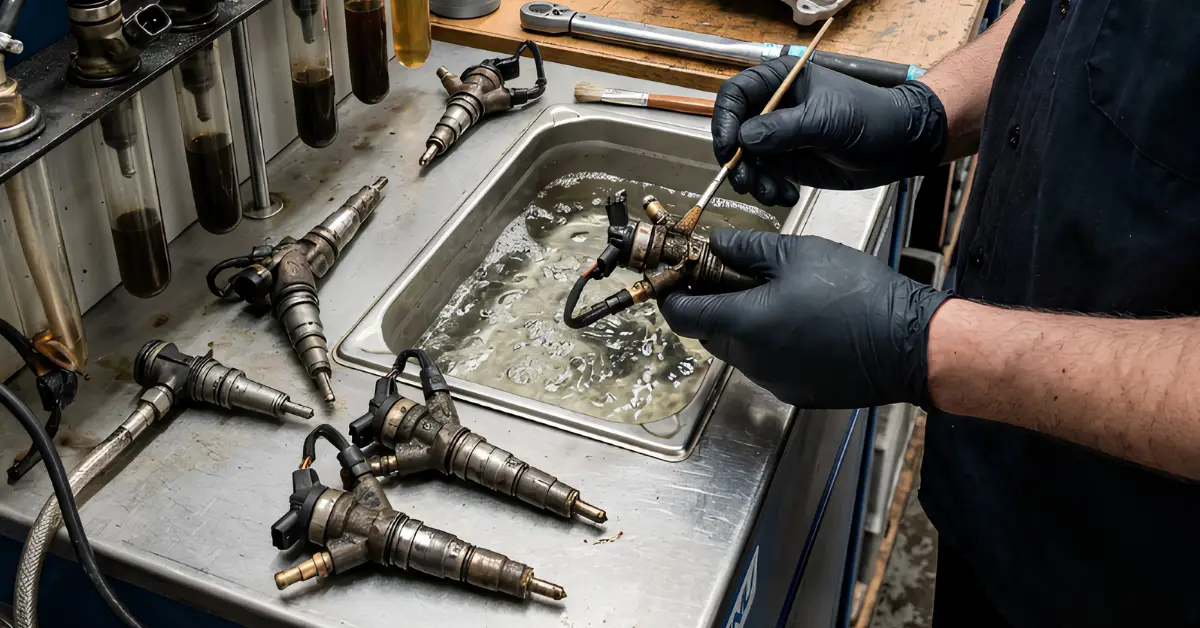
Removed injectors go into an ultrasonic bath. High-frequency sound waves in the cleaning solution dislodge deposits from internal passages that on-car cleaning cannot reach.
Each injector goes on a flow bench. We test spray pattern, delivery volume, and response timing. We compare the result against its group. This finds the specific unit at fault.
After any diesel injector replacement, we enter the correction code specific to that injector into the control unit. An uncoded or wrongly coded injector causes rough running or a failure to start.
Direct injection engines build up carbon on the intake valves themselves. Walnut shell media blasting removes these deposits, which fuel-based cleaning cannot reach since it only treats the injector side.
Fuel injector seals harden and leak over time. We replace them whenever an injector is removed, preventing the fuel leaks that follow reused, worn seals.
Where correction values point to a system-wide issue, not one cylinder, we test fuel rail pressure. This rules out a failing high-pressure pump.
Injectors confirmed faulty by flow testing and beyond what cleaning can fix get replaced. New units are matched to the engine's spec and coded accordingly.
We cut each cylinder from combustion, one at a time. We watch engine speed drop as we go. This isolates a weak cylinder. Then we decide if the injector is the cause.
Where injector faults appear across several cylinders at once, we check fuel quality. Water or particulate contamination in the fuel supply affects every injector, not just one.
After cleaning, coding, or replacement work, we clear adaptation values and relearn them through a road test. This lets the control unit set new baseline fuelling data.
Every suspect injector is tested on a flow bench before any decision gets made, avoiding unneeded replacement of injectors that clean successfully.
Diesel injector correction codes are entered precisely to their matching cylinder, since a wrong code causes rough running that owners often blame on the repair itself.
Intake valve carbon and injector condition are assessed together on TFSI engines, since treating only one leaves the underlying symptom unresolved.
Deposits beyond the reach of on-car cleaning are addressed with ultrasonic cleaning, restoring injectors that would otherwise be condemned to replacement.
Every job finishes with adaptation values cleared and relearned through a road test, giving the control unit accurate baseline data going forward.
Injector parts and labour carry a written guarantee, so a fault traced to the work itself comes back to us, not to you.

Higher storage and pump temperatures can speed up fuel degradation, adding to deposit build-up inside injectors over time.
Stop-start city driving keeps the engine cold-biased. Carbon deposits get less chance to burn off naturally.
Contamination entering during refuelling, or from a worn fuel system part, brings in particulates that speed up injector wear.
Air conditioning load and high air temperature together raise engine demand. This keeps injectors under sustained, higher-output conditions.
Fuel additive packages vary between suppliers here. This can leave engines more prone to carbon and deposit build-up than in markets with tighter fuel standards.
Injector faults look different depending on where the cause sits. It could be inside the injector, upstream in the fuel supply, or outside the fuel system entirely.
| Symptom | Likely cause |
|---|---|
| Rough idle only, smooths at higher revs | Single injector delivering less fuel than its neighbours |
| Hesitation only under load or acceleration | Injector response timing lagging under high demand |
| Rising fuel consumption, no power loss | Injector over-fuelling or leaking past its seat |
| Hard cold starts, runs fine once warm | Nozzle coking disrupting spray pattern at low temperature |
| Misfire code on one specific cylinder | Injector fault isolated to that cylinder |
| Misfire or rough running across several cylinders | Fuel supply issue, contamination, or rail pressure fault |
| Knocking noise that changes with engine load | Mechanical injector fault rather than a fuelling issue alone |
A fault confined to one cylinder almost always points to that cylinder's injector. A fault spread evenly across every cylinder usually points further upstream, toward fuel quality or rail pressure.
We start with fuel trims, cylinder contribution values, and stored injector correction data, narrowing down which cylinder shows a deviation before anything is removed.
Reported symptoms, such as idle roughness or hesitation, are matched against the data readings, confirming the pattern points to an injector rather than something else.
The suspect injector is removed and tested on a flow bench, measuring spray pattern and delivery volume against its expected values for that engine.
Based on the flow test result, the injector is either ultrasonically cleaned and retested, or replaced outright where wear sits beyond recovery.
On diesel models, the correct injector correction code is entered into the control unit, matching that specific injector to its correct cylinder.
Adaptation values are reset, and the car is road tested, confirming smooth running and normal fuel trims across every cylinder before handover.
An injector fault rarely stays contained to fuel delivery alone. A leaking injector over-fuels the cylinder. That extra fuel washes past the piston rings. It dilutes engine oil. Left alone, thin oil gives less lubrication exactly where the engine needs it most.
A misfiring cylinder sends unburned fuel straight into the exhaust. This can overheat and damage the catalytic converter. A manageable injector repair can turn into the kind of catalyst failure covered under Audi exhaust repair. On the mechanical side, rough running from an uneven cylinder loads the crankshaft and bearings unevenly. That is the wear our team checks for during broader Audi engine repair work.
Catching an injector fault early keeps it an injector job. Left running, it becomes several jobs at once.
Describe the symptom, rough idle, hesitation, or a warning light, and we will book a diagnostic scan to read fuel trim and injector data before recommending any repair. This sits alongside every other Audi repair in Abu Dhabi we carry out, always starting from data, not guesswork. Book online, or call Zenfo Auto Services for a slot this week.
Flow testing separates the two. A dirty injector often returns to normal delivery after ultrasonic cleaning. In contrast, a worn or damaged injector continues to show poor flow or pattern even after cleaning, and needs replacement instead.
Each diesel common rail injector carries a unique correction code from the manufacturer. This code tells the engine control unit how to fine-tune that specific injector's pulse timing. Without it, the engine can run roughly or fail to start.
Yes, and the two are often assessed together on direct injection engines. Since fuel never washes the back of the intake valve on a TFSI engine, carbon builds up there independently of injector condition, but produces similar rough-running symptoms.
Ultrasonic cleaning removes deposits from internal injector passages that a fuel additive running through the system cannot reach. On-car cleaning suits lighter deposits, while ultrasonic cleaning addresses heavier internal buildup.
There is no fixed interval, since deposit buildup depends heavily on driving pattern and fuel quality. A diagnostic scan showing fuel trim drift or cylinder contribution imbalance is a more reliable trigger than a fixed mileage figure.
An incorrect correction code causes the engine control unit to misjudge that injector's fuelling characteristics. This typically produces rough idle, poor performance, or in some cases prevents the engine from starting at all.
A single confirmed faulty injector can usually be replaced on its own. Flow testing identifies exactly which cylinder is affected, avoiding unnecessary replacement of injectors that are still performing correctly.
Independent injector repair using correctly specified parts and proper coding keeps your manufacturer warranty intact under UAE consumer law. The key factor is that the correction code and part specification match the engine correctly.