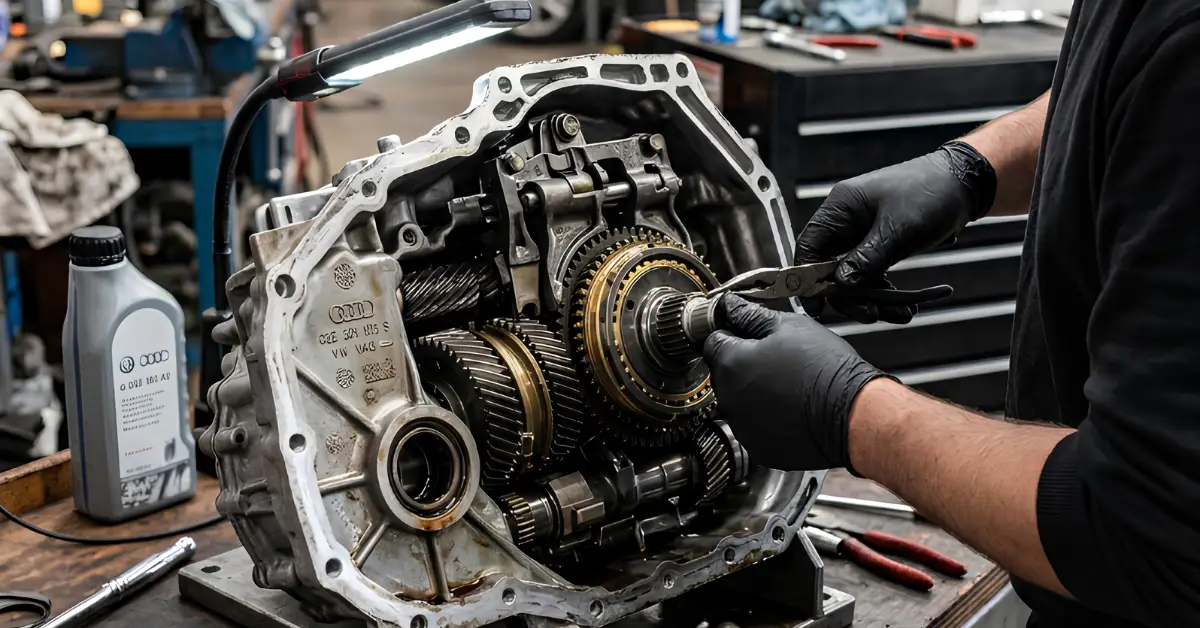
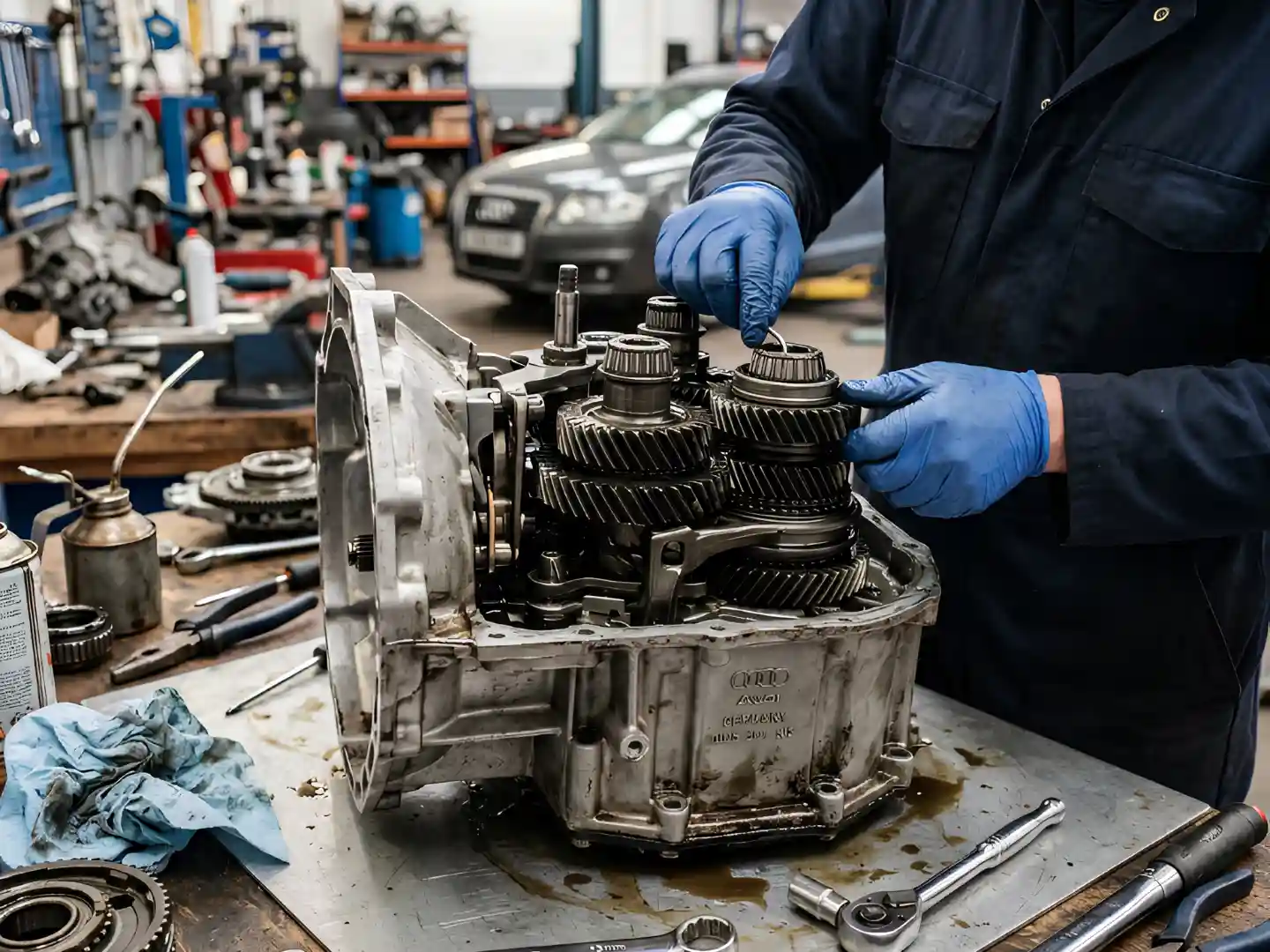
Zenfo Auto Services repairs worn gears inside Audi manual gearboxes, quattro centre differentials, and rear final drives in Abu Dhabi. Backlash is measured with a dial indicator down to the thousandth of a millimetre, tooth contact patterns are checked before reassembly, and gear oil is filled to the exact VW specification.
Gear condition is judged by measurement, not by how a car feels on a test drive.
Backlash Measurement
Backlash is the small gap between meshing gear teeth. It is measured with a dial indicator mounted on a magnetic base against the gear face. Correct backlash typically falls in a narrow band, often around 0.15 to 0.25 mm on differential gear sets. Too little backlash causes binding and heat. Too much causes clunking and faster wear.
Tooth Contact Pattern
After backlash is set, a marking compound is applied to the gear teeth, and the assembly is rotated by hand. The resulting pattern, high, low, or centred on the tooth face, confirms whether the gears line up correctly before the unit is closed. Backlash alone does not guarantee correct meshing, which is why this check follows every backlash adjustment.
Endfloat and Bearing Preload
Shaft endfloat and bearing preload are checked alongside backlash. A bearing set too loose lets the gears move under load, and that destroys a correctly set backlash within a short distance.
Symptoms
Signs Your Audi Has a Gear Problem
Whining that changes pitch with road speed
A howl that rises and falls with speed, not with engine revs, points to worn gear teeth or bearing wear. This noise persists even when coasting with the clutch pressed.
Clunk when pulling away or shifting into reverse
A knock felt through the floor as drive engages usually means backlash has grown beyond its designed range. This happens as the mating teeth wear down.
Grinding or crunching into a specific gear
Trouble entering one gear repeatedly, most often second or reverse, points to a worn synchro ring. It fails to match shaft speed before the dog teeth engage.
Popping out of gear under load
A gear that disengages itself under acceleration means worn selector forks or worn detent mechanisms. They no longer hold engagement securely.
Metal particles on the drain plug at an oil change
Fine metallic debris on a magnetic drain plug is one of the most reliable warning signs. It appears before any noise reaches the cabin.
Vibration through the floor that builds with speed
Uneven wear on gear teeth, or a chipped tooth, produces a rhythmic vibration. It gets stronger as road speed rises.
12 jobs covered
Audi Gear Repair Services at Our Abu Dhabi Workshop
Synchro Ring Replacement
Worn synchro rings are found with a feeler gauge against the gear cone. We replace them to restore clean, grind-free entry into the affected gear.
Selector Fork Repair
Worn selector forks cause imprecise gear engagement. The fork no longer holds the sliding collar firmly against the gear it is meant to lock into.
Selector Rail Repair
Rails guiding the selector mechanism are measured against wear limits and replaced where movement exceeds tolerance. This restores positive, direct gear selection through the linkage.
Gear Set Replacement
Chipped, pitted, or heavily worn gear teeth are replaced as matched sets, not individually. Mixing a new gear with a worn mating gear wears the new part down fast.
Crown Wheel Pinion Replacement
The differential's ring and pinion gear set is replaced together as a matched pair. It is then set up with correct backlash and a verified tooth contact pattern before the housing is closed.
Differential Bearing Replacement
Carrier and pinion bearings are replaced when preload cannot be set correctly, or when play is found. Worn bearings shift gear position under load and bring the noise straight back, even after a gear replacement.
Backlash Adjustment
Where gear teeth remain within service limits, backlash is reset using shims and checked with a dial indicator. This fixes clunk without the cost of a full gear set replacement.
Preload Adjustment
Bearing preload is measured and reset alongside backlash. A correctly set backlash figure means little if bearing play still lets the gears shift under load.
Quattro Centre Differential Repair
The centre differential, which splits drive between front and rear axles, is inspected and rebuilt. This includes internal gear sets and the multi-plate clutch pack on Torsen and electronically controlled versions.
Limited Slip Differential Rebuild
Clutch pack style limited slip units are rebuilt with new friction plates and correct preload. This restores the locking behaviour that fades gradually as internal plates wear.
Reverse Idler Gear Repair
The reverse idler gear and its shaft see less frequent, but higher-shock, loading than forward gears. Worn teeth here cause a grinding noise limited to reverse only.
Gear Oil Service
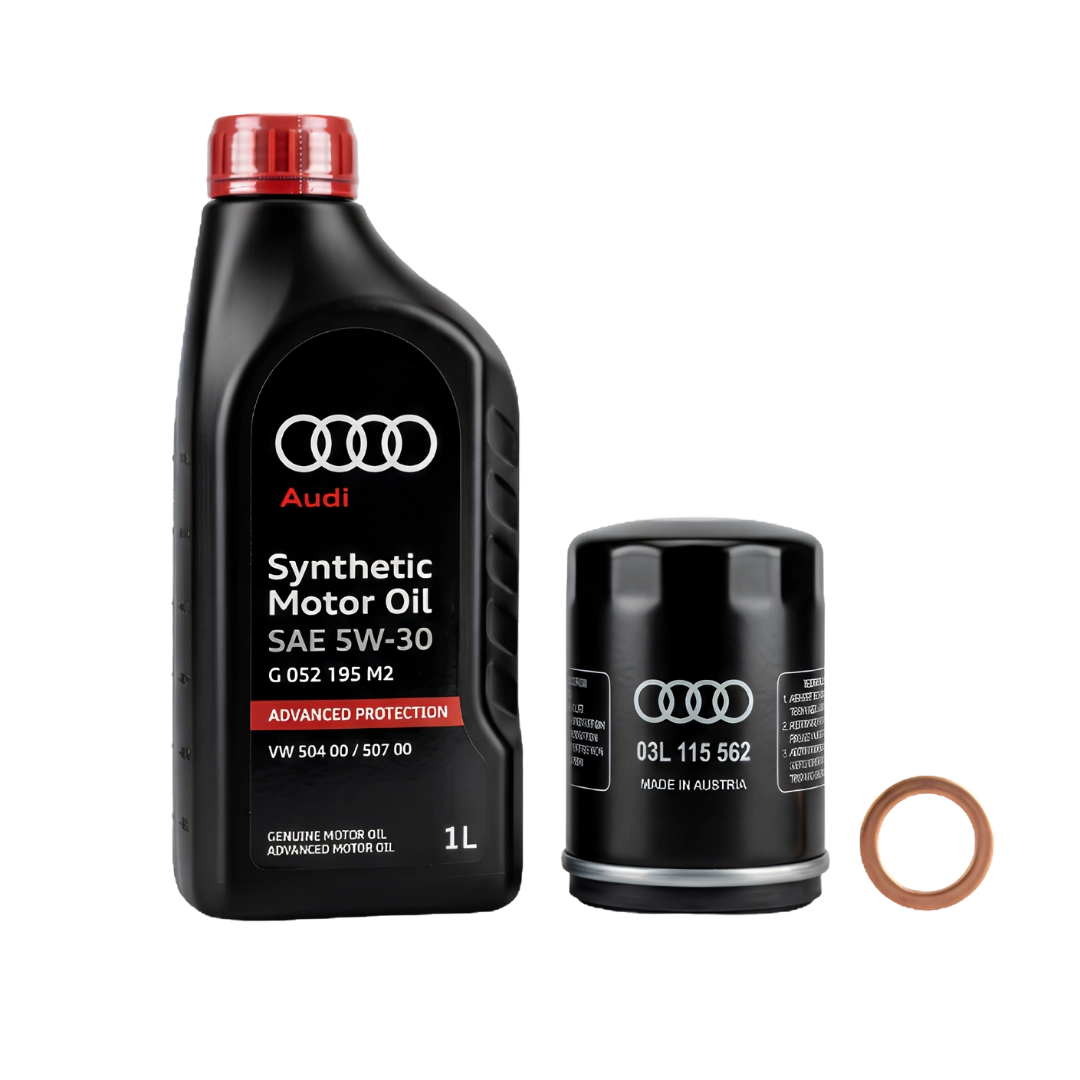
Gearbox and differential oil is drained and refilled to the exact VW specification, usually a GL-4 or GL-5 rated gear oil depending on the unit. The wrong specification speeds up wear on yellow-metal synchro components.
Why us
Why Choose Zenfo Auto Services for Audi Gear Repair
Backlash Set Precisely
Backlash is measured with a dial indicator against a magnetic base, not estimated by feel, giving a documented figure rather than a workshop guess.
Pattern Always Verified
Every gear set is checked with a marking compound after backlash is set, confirming correct tooth alignment before the housing is closed for good.
Matched Sets Only
Crown wheel and pinion, and other mated gear pairs, are replaced together as matched sets, never mixed with a worn partner that would wear the new part prematurely.
Correct Oil Used
Gear oil is filled to the exact VW specification for your unit, since the wrong oil grade accelerates wear on synchro components long before any gear itself fails.
Preload Checked Always
Bearing preload is set and verified alongside backlash, since a correctly set backlash figure means nothing if bearing play lets the gears shift under load.
Written Warranty
Gear components, seals, and labour carry a written guarantee, so noise or wear returning after the job comes back to us rather than becoming your repeat expense.
Abu Dhabi climate
Why Gear Wear Happens Faster on Audi Models in Abu Dhabi
Heavy stop-start traffic
Constant gear changes in dense city traffic put more load cycles through the same teeth in a given distance than steady highway driving does.
High ambient temperature
Gear oil thins at elevated temperatures, reducing the protective film between meshing teeth exactly when load and heat are both already elevated.
Sand contamination in old oil
Fine particles that reach the gear oil act as an abrasive between tooth surfaces, accelerating wear that would otherwise progress slowly.
Extended oil change intervals
Gear oil does not carry a dashboard reminder the way engine oil does, so intervals get skipped far more often, and degraded oil accelerates every form of gear wear.
Heavier SUV models
A Q7 or Q8 places substantially more torque through the same gear teeth as a lighter A3, particularly through the differential under hard acceleration.
Towing and heavy loading
Sustained high torque loading accelerates pitting and micro-fracturing on tooth surfaces faster than normal unloaded driving.
Reference
Gear Noise Diagnosis: What Each Sound Is Telling You
Gear faults speak in a specific language of sound and timing. Matching what you hear to when it happens narrows the cause before the car is even inspected.
Sound and timing
Likely cause
Whine that rises with speed, present on coast
Worn gear teeth or bearing wear inside the differential
Whine only under acceleration, gone on coast
Drive-side tooth wear or pinion depth misalignment
Whine only when coasting, gone on acceleration
Coast-side tooth wear or backlash shifted under load
Clunk when shifting into drive or reverse
Backlash beyond its designed range from worn teeth
Grinding when selecting one specific gear
Worn synchro ring failing to match shaft speed
Popping out of gear under acceleration
Worn selector fork or worn detent mechanism
Rhythmic clunk that speeds up with road speed
A chipped or broken tooth striking on each rotation
Clicking or popping only while turning
Differential side gear wear inside the carrier
A sound that shows up only on turns almost always sits inside the differential carrier, not the gearbox itself. That is where the side gears sit, letting each wheel turn at a different speed.
8 stages
How We Diagnose and Repair Audi Gears
01
Noise Diagnosed First
The car is driven and the noise is matched against speed, load, and steering input, since each pattern points toward a different worn component.
02
Oil Drained Inspected
Gear oil is drained and checked for metal particles, discolouration, and a burnt smell, all of which point to internal wear before the unit opens.
03
Unit Fully Opened
The gearbox or differential is stripped down on the bench, with every shaft, gear, and bearing laid out for individual inspection and measurement.
04
Components Measured Precisely
Every gear, synchro ring, and bearing is measured against its service limit with proper tools, rather than judged by eye or by feel.
05
Backlash Set Correctly
New or reused components are assembled with backlash set by dial indicator, bringing the gap between mating teeth within its specified range.
06
Pattern Verified Properly
Marking compound is applied to the gear teeth and rotated by hand, confirming the contact pattern sits centred before anything is sealed shut.
07
Unit Reassembled Sealed
The unit is reassembled to specified torque figures, with new gaskets and seals fitted throughout to prevent leaks after the repair is complete.
08
Oil Refilled Tested
Correct specification gear oil is filled to the proper level, and the car is road tested to confirm the original noise is gone.
Free inspection slot
Book Your Audi Gear Repair in Abu Dhabi
Send us a description of the noise and when it happens, accelerating, coasting, or turning, and we will book a diagnostic road test to confirm the cause before any work begins. A gear fault caught early is usually an adjustment, not a full rebuild. Book online, or call Zenfo Auto Services for a slot this week.
Whining that persists while coasting with the clutch pressed usually points to a differential or bearing issue rather than the gearbox itself. A road test correlating noise against speed and load narrows this down before the unit is opened.
02
Where gear teeth remain within their wear limit, backlash and bearing preload can be reset using shims. This resolves noise and clunk without the cost of a full gear set replacement.
03
Second gear synchro rings see heavy use in stop-start traffic and often wear before other gears. A worn ring fails to match shaft speed before the dog teeth engage, producing the grinding sensation.
04
Driving is possible short-term, but continued load accelerates wear on already-damaged teeth. What starts as adjustable backlash can progress to a chipped tooth and a full gear set replacement.
05
Gear oil has no electronic monitoring, so intervals depend entirely on the service schedule. Contaminated or thinned oil accelerates wear on every gear tooth and bearing in the unit.
06
A synchro ring failure causes grinding when selecting a gear, since it fails to match rotational speed before engagement. A gear tooth failure causes noise or vibration during normal driving, once that gear is already selected.
07
Most centre differential faults, including worn clutch packs and internal gear wear, are repairable. Full replacement is reserved for cases with damage to the housing itself or gears beyond their wear limit.
08
Backlash and preload adjustment can often be completed within a day. A full gear set replacement, including disassembly, measurement, and reassembly, typically takes 2 to 4 working days.

 Audi specialist service