
Radiator Pressure Testing
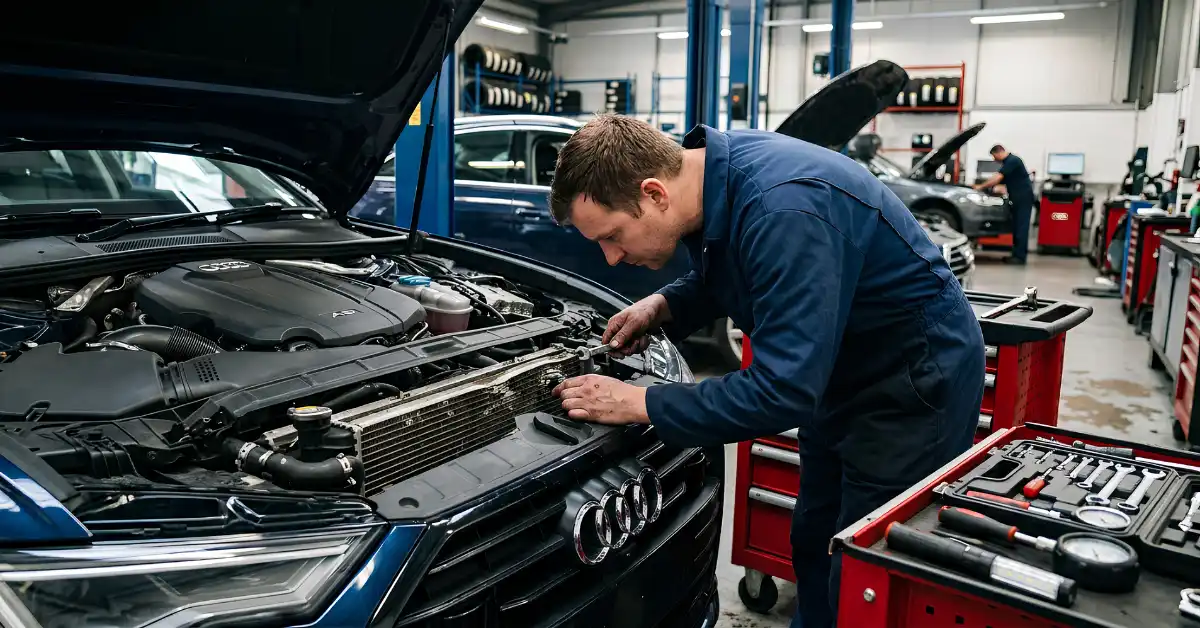
The full cooling circuit is pressurised to the system's rated pressure with a hand pump. Holding that pressure reveals exactly where a leak starts before any part is ordered.
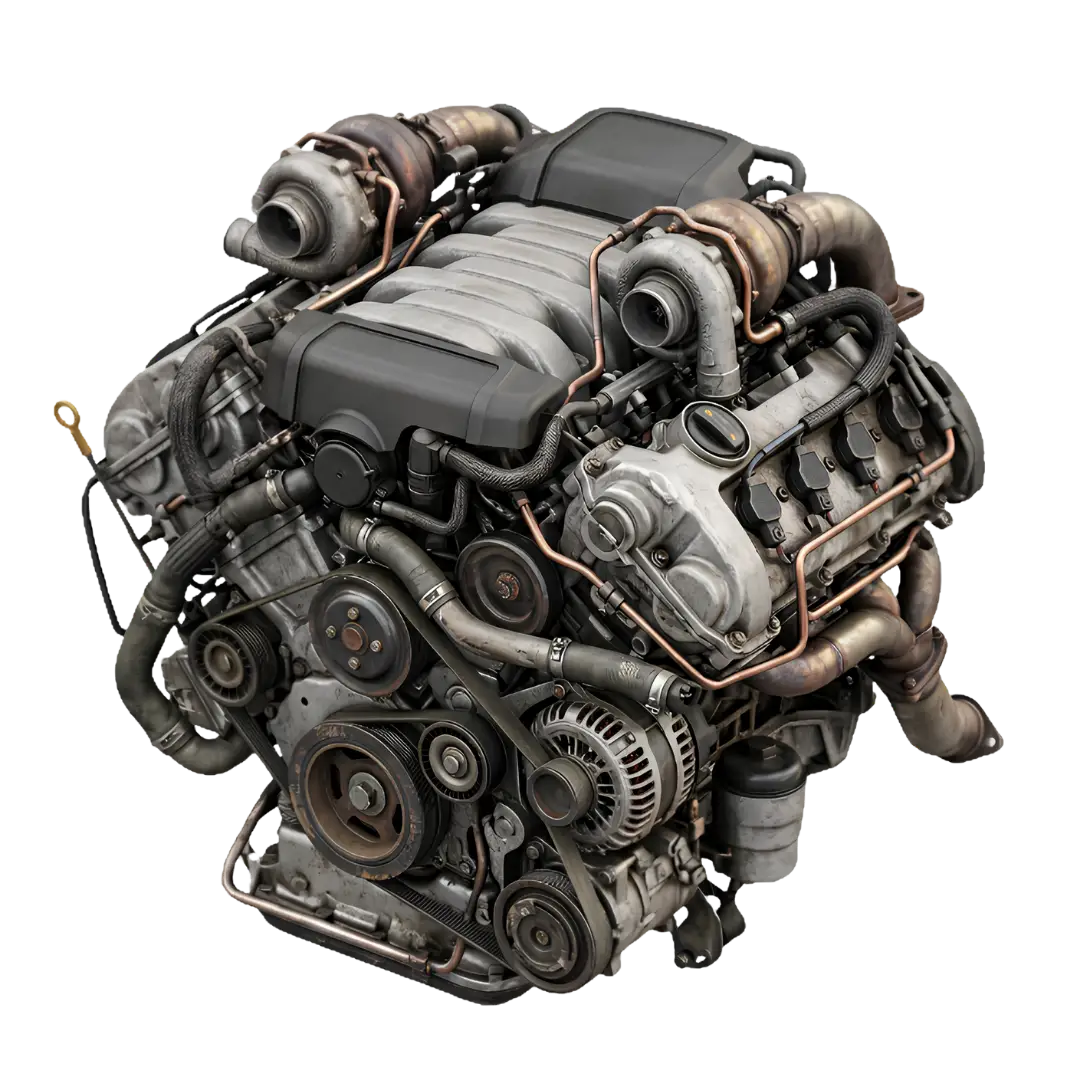 Engine Repair02
 Transmission Repair03
 Brake Pads Replacement04
 Oil Change05
 Suspension Repair06
 Car Electrical Repair07
 Body Paint08
 Pre Purchase Inspection09
 Clutch Replacement10
 Sanitisation11
 Timing Belt Replacement12
 Wheel Alignment13
 Window Tinting14
 Windshield Replacement15
 Gear Repair16
 Body Shop17
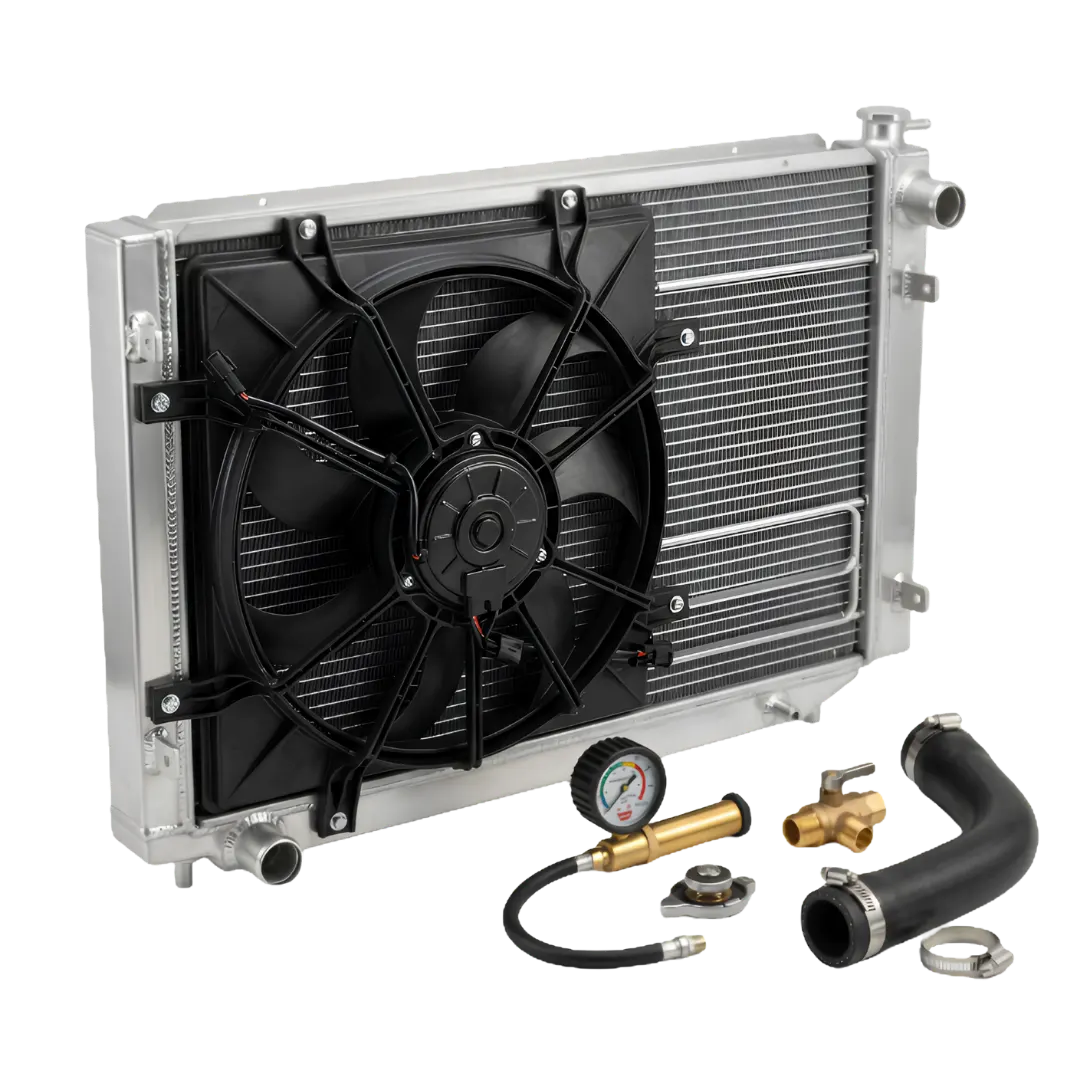 Radiator Repair18
 Exhaust Repair19
 Injector Cleaning20
 Car Wash21
 Ceramic Coating Service22
 Upholstery Service23
 Car Tyre Change24
 Car Steering Repair
 Audi specialist service
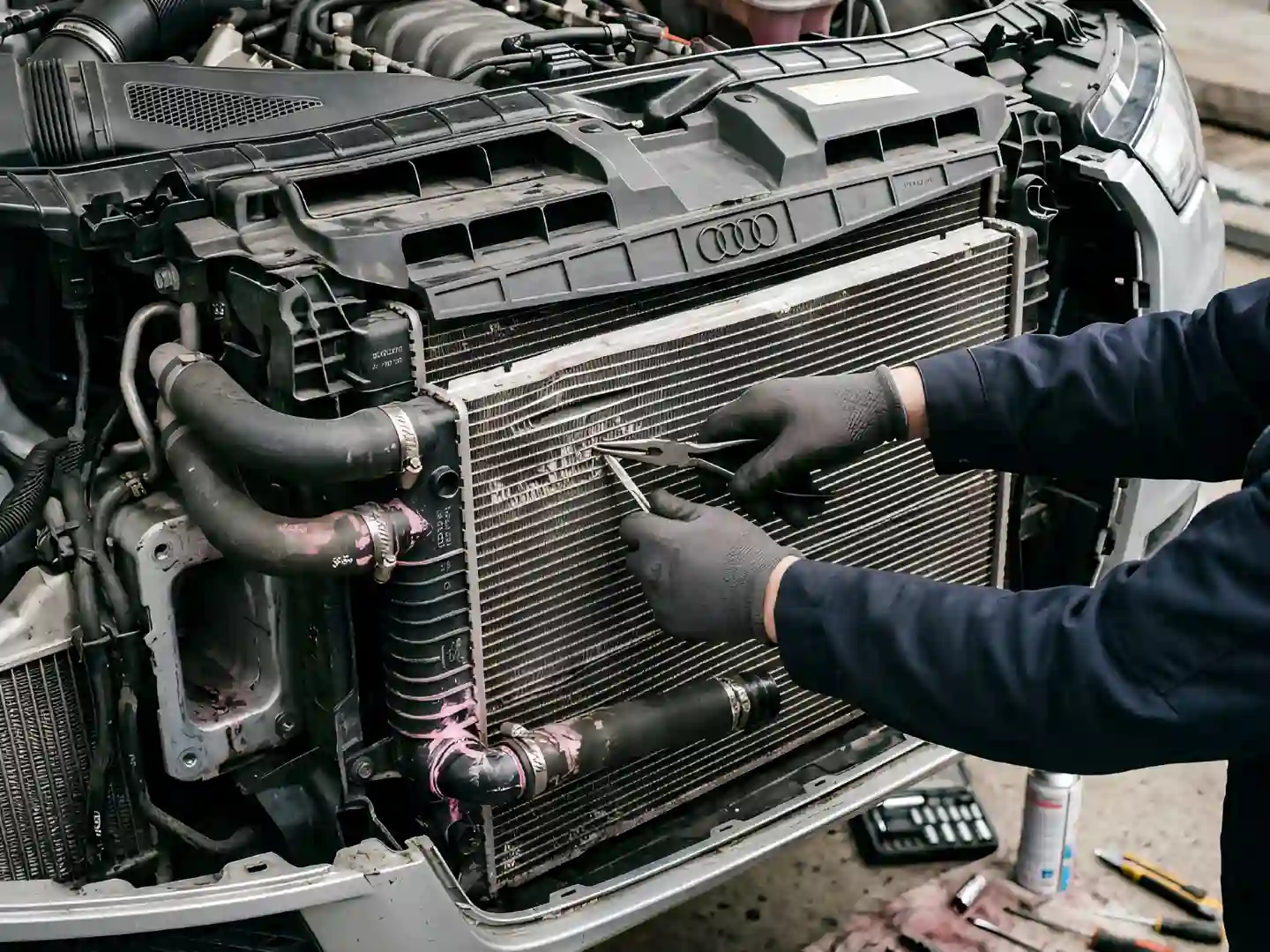
Zenfo Auto Services repairs and replaces Audi radiators in Abu Dhabi. We pressure test the full cooling circuit before touching a part. Every refill uses Audi-specified TL 774 coolant, never generic antifreeze, since the wrong chemistry attacks aluminum and plastic parts.
Coolant carries a clear sweet odour. Smelling it while driving usually means a leak has reached a hot surface somewhere in the engine bay.
A slow leak at the plastic tank seam or a hose connection often evaporates before it reaches the ground. It shows up only as a falling level in the expansion tank.
Reduced airflow at low speed exposes a partly blocked or leaking radiator. It copes fine on the highway but struggles in queued traffic.
Dried coolant leaves a chalky residue where it has evaporated repeatedly from the same small leak point.
Rust-coloured or oily coolant points to internal corrosion, or a head gasket letting combustion gases or oil into the cooling circuit.
Visible steam means the system has already reached boiling point. Stop the engine right away rather than driving further.
Radiator work sits alongside our wider range of Audi services in Abu Dhabi, and every job below starts from the same pressure test.
The full cooling circuit is pressurised to the system's rated pressure with a hand pump. Holding that pressure reveals exactly where a leak starts before any part is ordered.
Where the aluminum core itself is damaged or corroded beyond repair, we fit a new radiator matched to your engine and transmission cooler setup.
Where the failure sits at the aluminum-to-plastic seam, and the core stays sound, we address the affected tank directly, instead of replacing an otherwise healthy radiator.
The expansion tank cap is tested for its rated release pressure. A cap holding less pressure than specified lowers the coolant's boiling point and causes overheating under load.
A thermostat stuck closed causes rapid overheating, while one stuck open stops the engine from reaching operating temperature. Both faults are diagnosed and the thermostat replaced as needed.
Pump shaft bearing wear or impeller failure cuts coolant flow through the radiator. The pump is inspected and replaced where leakage or reduced flow is confirmed.
Hoses harden and crack with age and heat cycling. Any hose showing swelling, softness, or surface cracking is replaced before it fails under pressure.
Turbocharged engines use a second electric pump that keeps circulating coolant after the engine shuts off, cooling the turbo housing. This pump is tested and replaced where it fails to run its post-shutdown cycle.
A fan that fails to switch on at the right temperature, or a cracked shroud that lets airflow bypass the radiator core, is diagnosed and fixed.
The system is drained, flushed to remove scale and old coolant, and refilled with the correct TL 774 specification coolant mixed to the right ratio, then bled of trapped air.
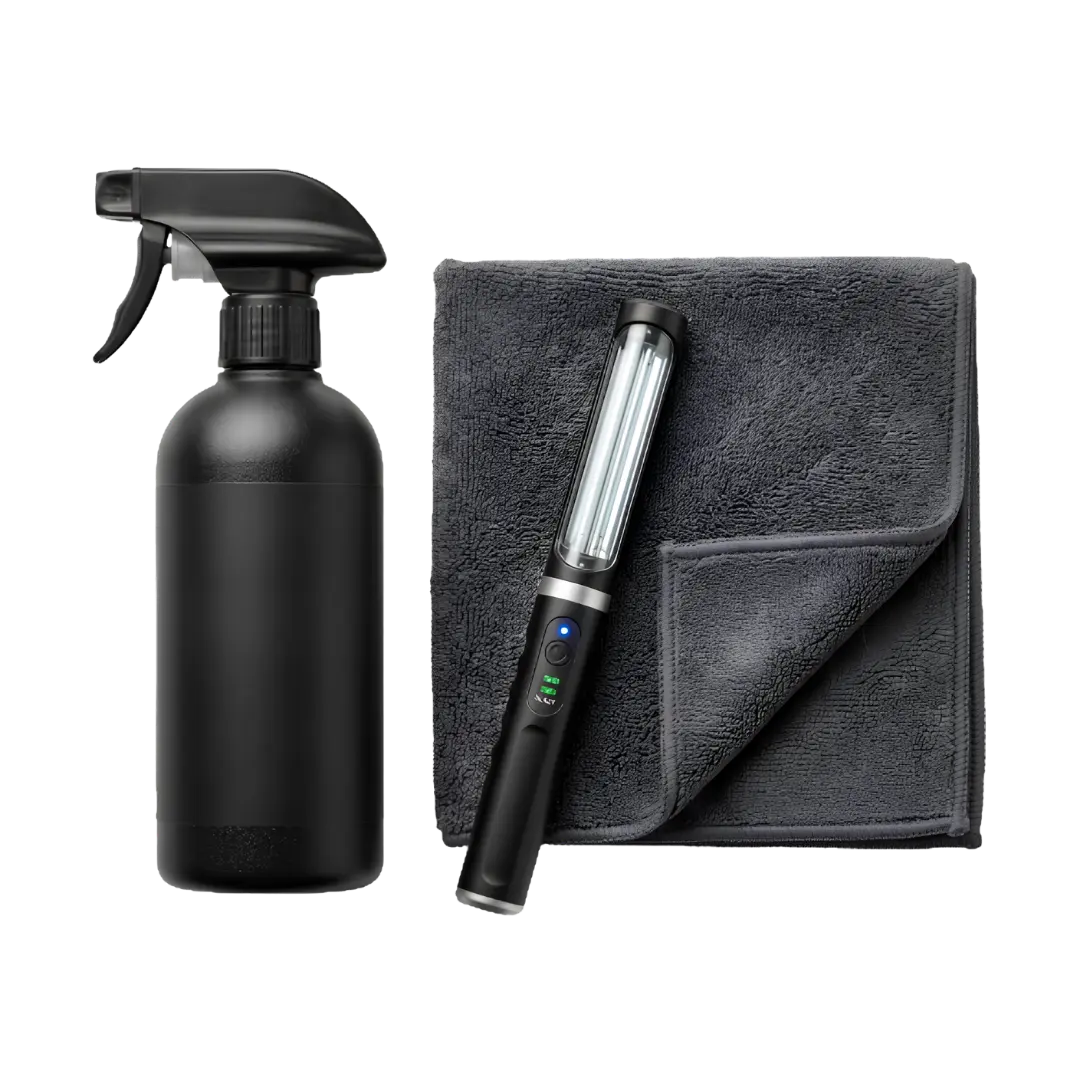
Where a leak is intermittent or hard to find, we add a UV dye tracer to the coolant. This lets us find the exact leak point under UV light on a return visit.
When combustion gases are entering the cooling system, a chemical block test confirms the diagnosis before any radiator work goes ahead, since a new radiator will not fix a head gasket fault.
Every job starts with a pressure test against the system's rated figure. This locates the exact fault instead of guessing from symptoms alone.
Only TL 774 specification coolant goes into your Audi, since generic antifreeze reacts differently with the aluminum and plastic parts in the system.
We check the aluminum-to-plastic seam specifically, since this is where most radiator failures start, well before the core itself shows any damage.
Intermittent or hard-to-find leaks are traced with a UV tracer added to the coolant, confirming the exact source instead of replacing parts on suspicion.
Every refill is bled of trapped air before the car leaves, since air pockets cause exactly the overheating symptoms a fresh coolant fill was meant to fix.
Radiator, hose, pump, and thermostat work all carry a written guarantee, so a fault traced to the repair itself comes back to us, not to you.
Summer air temperatures well above the system's design assumptions leave the radiator working near its limit, even before traffic or a hill climb adds more load.
Reduced airflow through the radiator core at low speed forces the cooling fan to run longer. Any partial blockage shows up right when airflow is already limited.
Fine dust settling between the aluminum fins cuts the surface area available for heat transfer, slowly reducing cooling capacity even with no leak present.
Frequent short trips followed by full engine heat, repeated many times a day, wear out the aluminum-to-plastic bond faster than steady long-distance driving would.
Strong sun exposure hardens coolant hoses from the outside in, cutting their service life compared with a cooler climate.
Coolant changes how it looks as it degrades or picks up contamination. Reading those changes gives an early warning before a temperature gauge ever moves.
| Coolant appearance | Likely cause |
|---|---|
| Clear pink, violet, or blue, no odour | Healthy coolant within its service life |
| Faded or nearly clear colour | Additive package depleted, coolant overdue for replacement |
| Rust brown or orange tint | Internal corrosion, often from a mismatched or degraded coolant |
| Milky or creamy appearance | Oil contamination, usually from a head gasket or oil cooler fault |
| Oily film floating on the surface | Same as above, oil entering the cooling circuit somewhere |
| Gritty or gelled texture | Two incompatible coolant chemistries mixed together |
| Bubbles visible in the expansion tank at idle | Combustion gases entering the system through a head gasket fault |
Coolant can look fine by eye and still be chemically worn out, since additive depletion happens before any colour change in some formulations. This is why replacing coolant on schedule matters more than a visual check alone.
We talk through coolant loss patterns, temperature gauge behaviour, and any visible residue. This narrows down the likely fault before the car even goes on the lift.
Coolant level, colour, and smell are checked, since discoloured or oily coolant points toward internal contamination rather than a simple external leak.
The system is pressurised with a hand pump to its rated pressure. We watch the reading to see whether it holds steady or drops.
Where pressure drops, we check every hose and joint, and the radiator itself, using UV dye where needed, until we confirm the exact leak point.
The failed part, radiator, hose, pump, or cap, is assessed against its condition and age, and we write up a repair or replacement recommendation.
The confirmed fault is fixed, whether that means a part replacement, a seam repair, or a new cap, using parts matched to your engine's cooling setup.
Coolant is refilled to the correct TL 774 specification and ratio, then the system is bled of trapped air, since air pockets cause false overheating readings.
The car is driven under load with temperature monitored throughout, confirming the fault is fixed, and the system holds pressure correctly before handover.
Let us know what the temperature gauge is doing and whether you have noticed any coolant smell or level drop, and we will book a pressure test to confirm the exact cause. Catching a cooling fault early is almost always cheaper than repairing the head gasket damage that follows an overheat. Book online, or call Zenfo Auto Services for a slot this week.
Reduced airflow through the radiator at low speed exposes a partial blockage or a weak cooling fan that copes fine at higher speeds. This pattern points toward a radiator or fan issue rather than a major coolant leak.
Where the aluminum core remains sound, a repair at the plastic tank seam is possible in some cases. A core with internal corrosion or significant damage needs full radiator replacement instead.
Audi specifies TL 774 series coolant, most commonly labelled G12, G12+, or G13, and never plain water or generic green antifreeze. The wrong chemistry accelerates corrosion of the aluminum and plastic components in the system.
A gauge reading above normal but below the red zone still means the engine is running hotter than designed. Continued driving risks head gasket damage, and the cause should be checked before it progresses to full overheating.
A pressure test isolates the source, since a failing radiator loses pressure while a failing pump maintains pressure but reduces coolant flow. Both symptoms can look identical from the driver's seat.
Mixing incompatible coolant chemistries can reduce corrosion protection and, in some cases, cause the coolant to gel or separate. A full flush and refill with the correct specification resolves this.
Turbocharged engines run an electric pump that continues circulating coolant after the engine shuts off, cooling the turbo housing to prevent oil coking. A failed auxiliary pump shortens turbo life over time, even though the main cooling system still works normally while driving.
A slow leak with no visible puddle still represents ongoing coolant loss and should be diagnosed before it progresses. UV dye tracing finds these leaks reliably, even when they evaporate before reaching the ground.