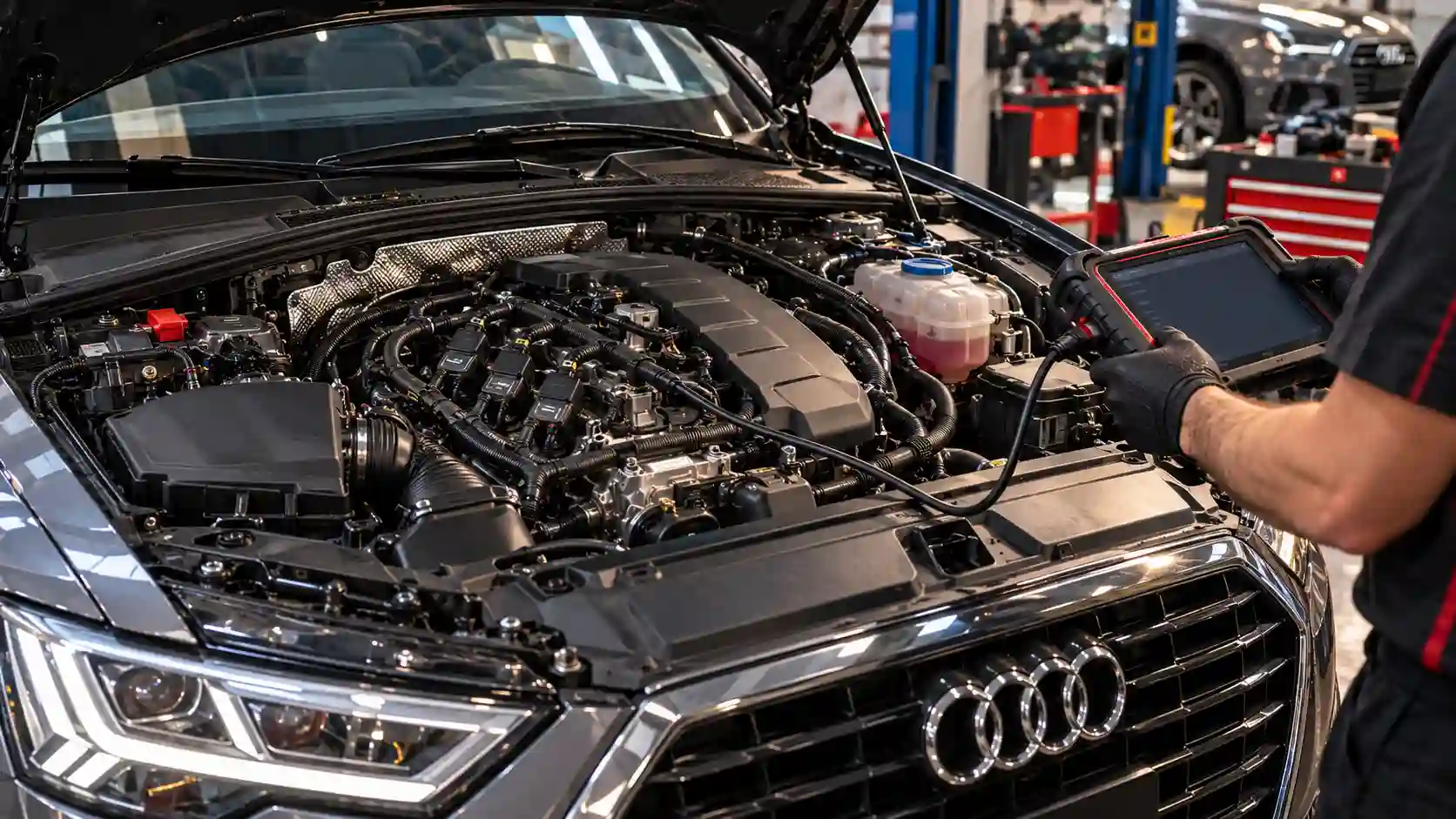









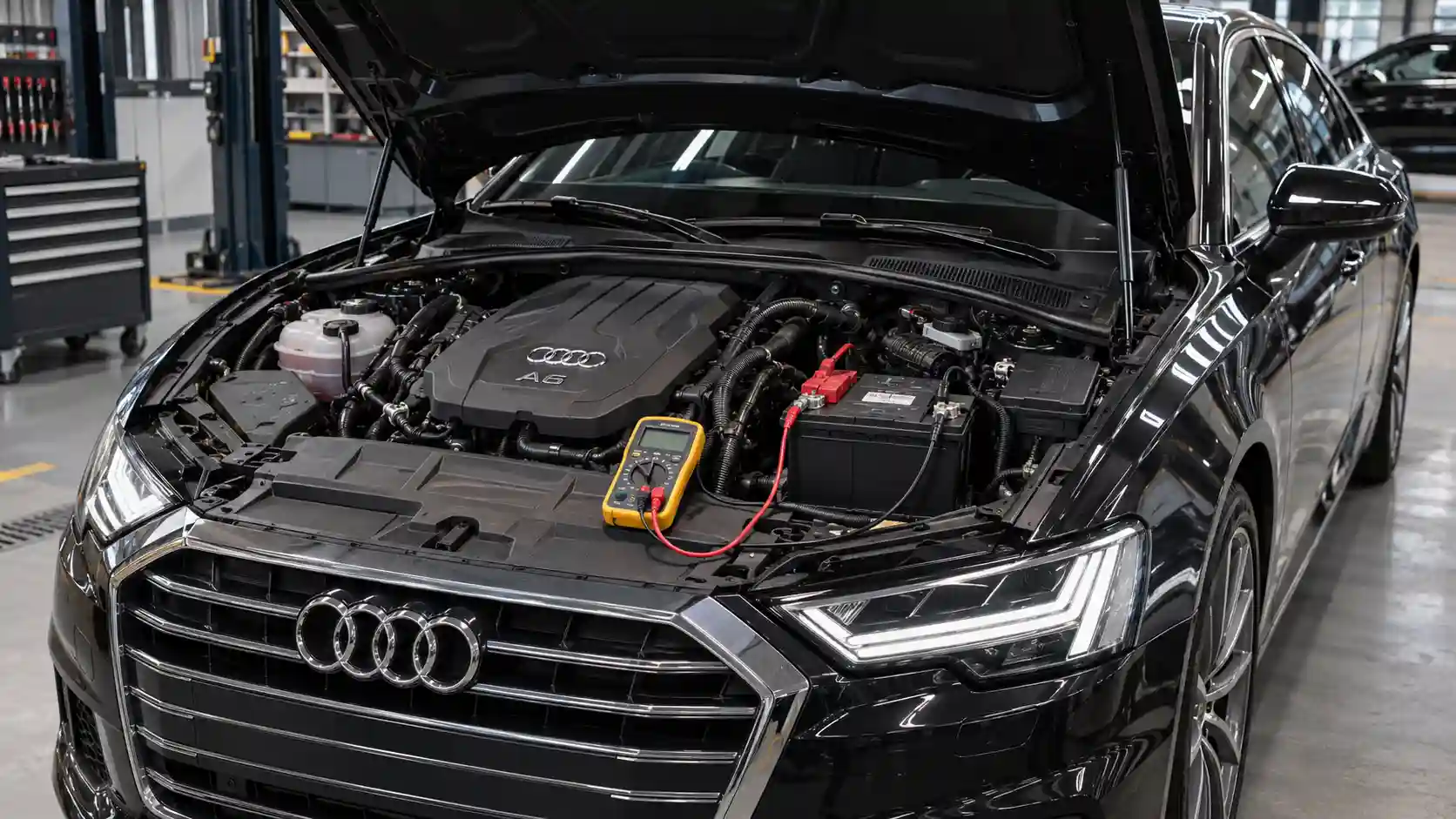
Modern Audis run on dozens of control modules that talk to each other every second. When one wire, sensor, or battery falters, the whole car can start acting strangely.
Audi electrical problems are mainly caused by weak or failing batteries, alternator and charging faults, parasitic drain, water getting into control modules, corroded or damaged wiring, CAN bus communication faults, and software or coding errors.
Heat and humidity in Abu Dhabi speed up several of these causes. Each one leaves its own pattern of symptoms, which the sections below explain along with the usual fix.
Audi Electrical Faults by the Numbers
Recent recalls show how small electrical flaws can affect thousands of cars. In 2025, Audi and Volkswagen recalled nearly 14,000 Q4 e-tron and ID.4 vehicles because condensation on a DC/DC converter's circuit board could cause a short. The converter recall report traced it to too little protective coating against moisture.
Other recent campaigns covered high-voltage battery modules in about 6,499 e-tron GT cars and battery overheating risk in about 20,201 Q5 and A7 plug-in hybrids. Petrol Audis face more everyday faults, but the root causes are often the same: heat, moisture and weak connections.
Workshop figures are just as telling. A hidden parasitic drain can flatten a fully charged battery in 8 to 12 hours, and engine bay temperatures above 45°C shorten the life of the AGM batteries Audi uses.
Common Causes at a Glance
| Cause | Common symptoms | Usual fix |
|---|---|---|
| Weak or aging battery | Slow cranking, random warnings, start-stop not working | Load test, AGM replacement, battery coding |
| Alternator or charging fault | Battery light, dimming lights, flat battery after driving | Output and ripple test, alternator repair |
| Parasitic drain | Car dead by morning | Circuit-by-circuit current draw test |
| Water in control modules | Damp footwell carpet, locks or windows failing | Clear drains, dry or replace module |
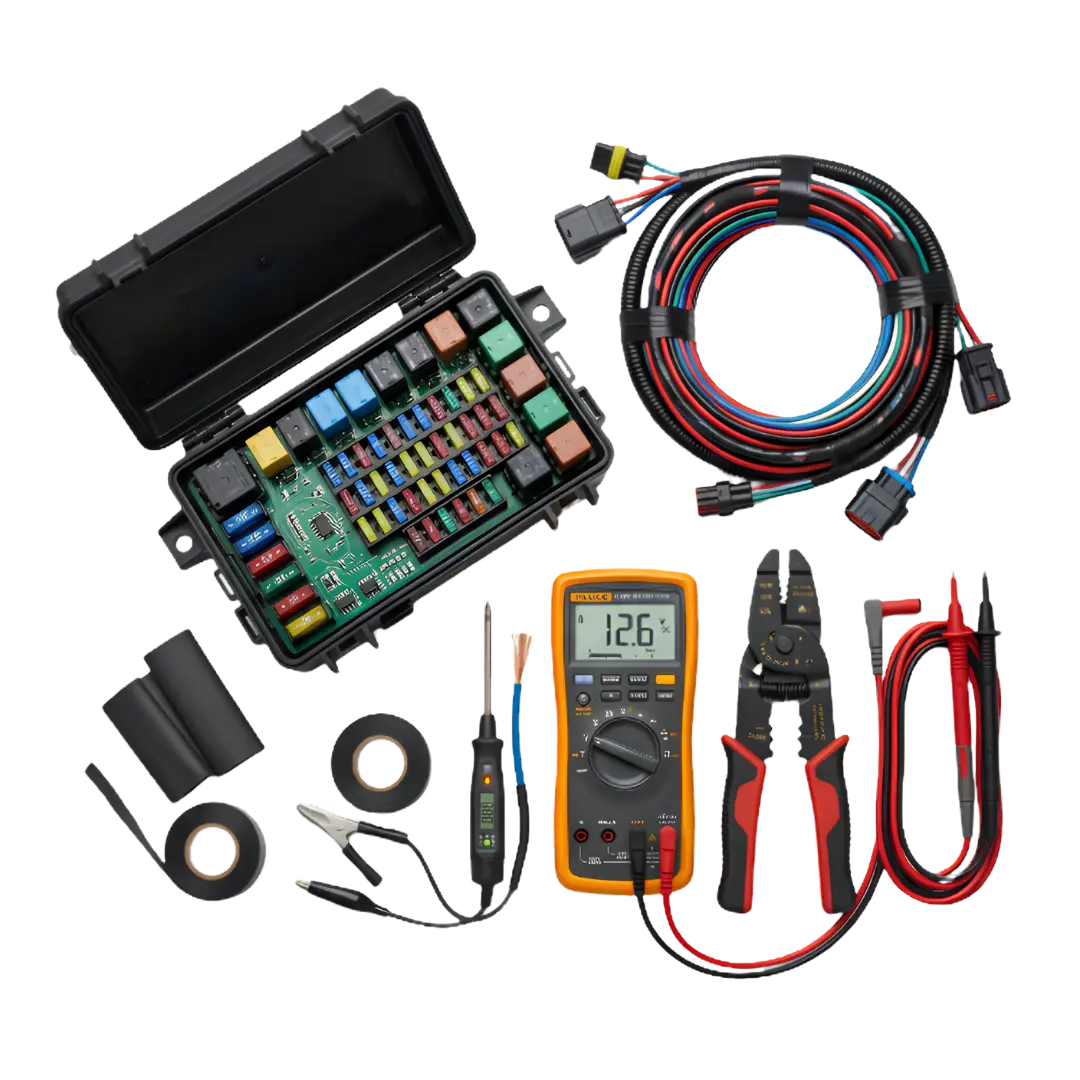
| Damaged wiring | Faults that come and go, repeat blown fuses | Repair harness with sealed splices |
| CAN bus fault | Several warnings at once, modules not responding | Network testing, module or wiring repair |
| Software or coding error | Faults after a part swap or update | Update software, code module to VIN |
A Weak or Failing Battery
Why Heat Shortens Battery Life
The 12-volt battery powers every module in the car, even when it is parked and locked. Most modern Audis use AGM batteries, which handle start-stop systems well but lose capacity quickly in extreme heat.
A weak battery rarely fails all at once. Instead, it causes low-voltage errors that show up as random warning lights, a lazy start-stop system, or an MMI screen that reboots.
Why a New Battery Needs Coding
Audi's Battery Management System adjusts charging to the battery's age, type, and size. When a new battery is fitted, it has to be registered or coded to the car.
If this step is skipped, the system keeps charging as if the old, worn battery were still fitted. That can overcharge the new one and shorten its life by months or even years.
Alternator and Charging Faults
The alternator keeps the battery topped up and powers the electrics while the engine runs. Worn brushes or failed diodes inside it reduce output, so the car slowly drains its battery even on long drives.
Common signs include a battery warning light, lights that dim at idle, and a flat battery soon after a trip. A faulty diode can also send electrical noise, called ripple, through the system and confuse sensitive modules.
Testing output voltage and ripple under load shows whether the alternator, the battery, or the wiring is at fault. That avoids replacing a good battery when the real problem sits elsewhere.
Parasitic Drain When the Car Is Parked
An Audi should go into a deep sleep mode within a short time of being locked. If a module stays awake, it keeps drawing current and slowly empties the battery.
Typical culprits include a sticking relay, a faulty comfort module, an aftermarket dashcam or tracker, and a glovebox or boot light that never switches off. Even a small draw can flatten a full battery in 8 to 12 hours.
Finding the source means testing current draw circuit by circuit while the car is asleep. This takes patience, but it is the only reliable way to stop a battery dying every morning.
Water Getting into Control Modules
Several Audi models mount important modules low in the footwells or under the seats. Blocked sunroof drains, a clogged scuttle panel drain, or a failed door seal can let water reach them.
The first sign is often a damp carpet, followed by central locking that skips a door, windows that stop working, or lights that behave oddly. Moisture corrodes circuit boards over time, so the faults usually get worse.
Clearing the drains and sealing the leak comes first. A damaged module then needs drying, repair or replacement, and a new unit must be coded to the car.
Corroded, Chafed or Damaged Wiring
Wiring looms run through doors, engine bays and boot lids, where they flex and heat up every day. Over the years, insulation can crack, connectors can corrode, and sharp edges can rub through the outer cover.
Rodents are another surprising cause, since some like to chew wiring in parked cars. The result is often an intermittent fault that disappears when the car is moved.
Repeat blown fuses are a clear clue that a short sits somewhere further down the circuit. Proper repairs use Audi-spec connectors and sealed splices rather than tape, which fails quickly in UAE heat.
CAN Bus Communication Faults
Audi modules share information over a network called the CAN bus. Separate circuits handle comfort features, infotainment, and the powertrain, and each module must reply to the others in a fraction of a second.
When one module or wire on the network fails, several warning lights can appear at once. A scan may show modules with "no communication", even though most of them are healthy.
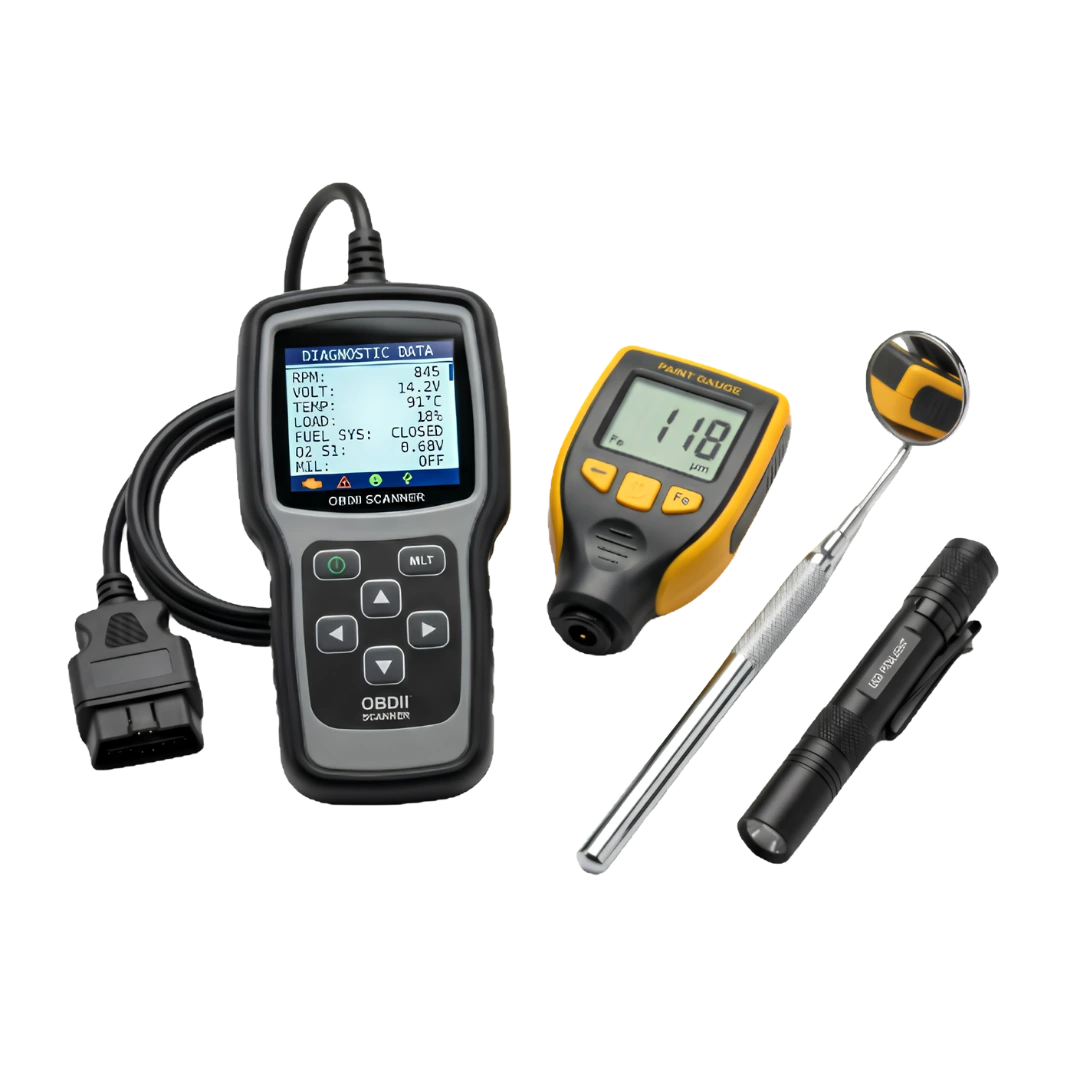
Testing each network branch separately pinpoints the faulty part. Computer diagnostics with live data are essential here, because a basic code reader cannot see network traffic.
Software, Coding and High-Voltage Faults
Modern Audis rely on software as much as hardware. A failed update, a replaced module that was not coded, or a mismatch between versions can cause warnings that look like hardware failures.
Electric and plug-in models add high-voltage systems on top. An e-tron GT recall covered battery modules that could short-circuit, which shows why these cars need specialist checks.
Any high-voltage warning should be treated seriously. Owners should stop using public fast chargers until the car has been checked and confirm any open recalls with the official dealer.
How to Prevent Audi Electrical Problems
Test the Battery Before Summer
A quick load test before the hottest months shows whether the battery can cope. Replacing a weak battery early costs far less than a roadside call-out and the module faults that low voltage can cause.
Always fit the correct AGM type and capacity. Make sure the new battery is coded to the car on the same visit.
Keep Drains and Seals Clear
Ask for sunroof and scuttle drains to be checked at each service. A blocked drain is cheap to clear but expensive to ignore.
After a car wash or rare rain, check the footwell carpets by hand. Any dampness is a reason to book an inspection.
Fix Warning Lights Early
A warning light that clears and then returns is a fault waiting to grow. Scanning it early often turns a large repair into a small wiring or connector fix.
Avoid fitting cheap aftermarket accessories that draw power around the clock. A professionally wired dashcam with a voltage cut-off protects the battery.
Conclusion
Audi electrical faults can feel random, but they almost always trace back to a clear cause. Once that cause is found, most repairs are quicker and cheaper than owners fear.
Audi electrical problems usually start with the battery, the charging system, parasitic drain, water in modules, damaged wiring, network faults, or software errors. Heat and moisture in Abu Dhabi make several of these more likely. Regular battery tests, clear drains, and early scans keep the electrics healthy.
Zenfo Auto Services in Musaffah M9 offers a free diagnostic scan and a 12-month warranty on repairs. Bring your Audi in for electrical repair and get the fault traced, not guessed.
Frequently Asked Questions
Why does my Audi battery keep dying overnight?
The most likely cause is a parasitic drain, where a module or accessory stays awake after the car is locked. An aging battery or a weak alternator can also leave too little charge to last the night.
Can a weak battery cause warning lights in an Audi?
Yes, low voltage often makes modules report false faults, so several warnings can appear at once. Testing and replacing the battery, then clearing the codes, often fixes them in one go.
Does a new Audi battery need to be coded?
Yes, the Battery Management System needs to know the new battery's type and capacity. Without coding, it may overcharge the battery and cut its life short.
What does a damp footwell mean for the electrics?
It usually points to a blocked drain or failed seal letting water into the cabin. Several control modules sit low in the car, so water there can cause locking, window, and lighting faults.
How long does an Audi electrical diagnosis take?
A single-circuit fault often takes about an hour to trace. Intermittent faults and parasitic drains can take longer, since they need testing with the car asleep or under load.