



Audi suspension is tuned to feel firm, quiet, and planted at highway speed. When parts start to wear, that composure fades slowly, so many owners miss the early clues.
The main signs of Audi suspension problems are clunking over speed bumps, a car sitting lower on one corner, pulling or nose-diving under braking, steering vibration at speed, extra body roll, uneven tyre wear, and suspension or ride-height warnings.
Each sign points to specific worn parts, such as shocks, bushes, ball joints, or air springs. The sections below explain what each sign means, how urgent it is, and what the repair usually involves.
Audi Suspension Facts and Figures
Audi allows only about 15 mm of height difference from one corner to another. Anything beyond that suggests a weak spring, a leaking air strut, or a sensor fault.
Ball joint play is just as strict. Movement of more than about 1.5 mm under load is treated as a safety issue, because a failed ball joint can let a wheel fold under the car.
Recalls show that even new cars can be affected. A 2021 US recall covered 40,993 Audis, including RS5, A5, and S5 Sportback models, because a rear trailing arm lock nut could break from stress corrosion. In 2025, an air strut recall notice told e-tron GT owners to watch for a warning message and a lower ride height at one corner.
Audi Suspension Types by Model
| Suspension type | Typical models | What tends to wear |
|---|---|---|
| Steel springs with passive dampers | A3, entry-level A4, Q2, Q3 | Shocks, strut mounts, bushes |
| Adaptive dampers (DCC) | A4, A5, A6, A7, Q5 S line | Damper valves, wiring, sensors |
| Adaptive air suspension | Q7, Q8, A8, A6 allroad, some A7 and e-tron models | Air springs, compressor, valve block, height sensors |
| Magnetic ride | Some TT and R8 versions | Magnetic dampers, control unit |
Warning Signs and Likely Causes
| Warning sign | Likely worn parts | How urgent |
|---|---|---|
| Clunk over speed bumps | Sway bar links, control arm bushes, strut mounts | Book soon |
| Car lower on one corner | Air spring, coil spring, height sensor | Book soon, urgent if dropping fast |
| Nose dive or pulling when braking | Shock absorbers, control arm bushes | Urgent |
| Steering shake at 80 to 120 km/h | Tie rod ends, ball joints, wheel balance | Urgent |
| Extra body roll in corners | Shocks, sway bar links | Book soon |
| Uneven inner or outer tyre wear | Alignment, bushes, ball joints | Book soon |
| Suspension or ride-height warning | Air system, DCC damper, sensor | Check before long trips |
Warning Signs to Watch For
Clunking Over Speed Bumps
A dull clunk or knock over speed bumps is often the first sign owners notice. It usually comes from worn sway bar links, tired control arm bushings, or a strut top mount that has started to break up.
These parts are rubber and metal joints that soak up small shocks. Once the rubber cracks, metal parts knock together, and the noise grows louder over time.
A rattle on rough roads points to the same group of parts. Fixing them early protects the more expensive pieces around them.
A Car Sitting Lower on One Corner
Walk around the car after it has been parked overnight. If one corner looks lower than the others, a spring or air strut is likely losing support.
On steel-spring Audis, a broken coil spring is the usual cause. On air suspension models, a cracked air spring, a leaking valve block or a faulty height sensor can let one corner sink.
This sign deserves quick attention. A leaking air spring forces the compressor to run much harder, and a burnt-out compressor costs far more than the spring.
Pulling or Nose Diving When Braking
When shocks wear out, the front of the car dips sharply under hard braking. This nose dive moves weight forward and can make the car take longer to stop.
Pulling to one side under braking often means a worn control arm bush or uneven damping between the left and right sides. It can also come from a brake fault, so both systems should be checked.
Because stopping distance is affected, this is one of the more urgent signs. It should be inspected before the next long drive.
Steering Vibration at Highway Speed
A shake through the steering wheel at around 80 to 120 km/h can come from wheel balance, but worn suspension parts are a common cause too. Loose tie rod ends and ball joints let the wheel wobble slightly at speed.
If balancing the wheels does not fix it, the steering and suspension joints need checking. A worn front control arm bush can also cause a shimmy under braking.
Tie rods and ball joints link the steering to the wheels. Any looseness here is a safety issue, not just a comfort one.
Extra Body Roll and Uneven Tyre Wear
If the car leans more in corners than it used to, or feels floaty over dips, the dampers are losing control. Worn sway bar links reduce the car's resistance to roll as well.
Tyres often tell the story before the driver feels it. Wear on the inner or outer edge points to an alignment problem, often caused by worn bushes or ball joints that let the wheel angle shift.
Replacing tyres without fixing the cause only wastes money. The new set will wear the same way within months.
Signs Specific to Air Suspension and DCC
Compressor Running Longer Than Usual
The air compressor tops up the system now and then, and owners rarely hear it. If it runs for long periods, or starts often after parking, there is probably a leak somewhere in the springs, lines, or valve block.
A tired compressor may also struggle to raise the car after it has been parked. This is often the last warning before the compressor fails.
Suspension Warnings and Modes That Feel the Same
Air and adaptive systems report faults on the dashboard, often as an air spring symbol or a suspension warning. Audi has issued bulletins for warnings caused by compressor electrical errors on recent Q7 models.
On cars with DCC, a ride that feels the same in Comfort and Dynamic mode suggests a damper or wiring fault. A diagnostic scan reads the stored codes and shows which corner is affected.
Why Abu Dhabi Roads Wear Suspension Faster
Speed bumps on almost every residential street put repeated loads on bushes, links and mounts. Sand and fine dust get into rubber boots and joints, where they act like sandpaper on moving parts.
Heat dries out rubber bushes and air spring bags, so they crack sooner than in cooler climates. Coastal humidity in areas such as Al Reem Island and Yas Island adds corrosion to metal joints and fixings.
Heavy SUVs such as the Q7 and Q8 put more weight on every part. A suspension check every 20,000 km helps catch wear before it turns into a larger repair.
What Happens If You Ignore the Signs
Worn suspension parts rarely fail in isolation. A leaking shock lets the tyre bounce, which wears the tyre and loads the bushes, links and wheel bearings harder.
On air suspension cars, an ignored leak can burn out the compressor and damage the valve block. A small air spring job can then grow into a far larger bill.
Safety is the bigger concern. Worn shocks lengthen braking distances, and a failed ball joint or tie rod can cause a sudden loss of steering control.
How Suspension Problems Are Diagnosed
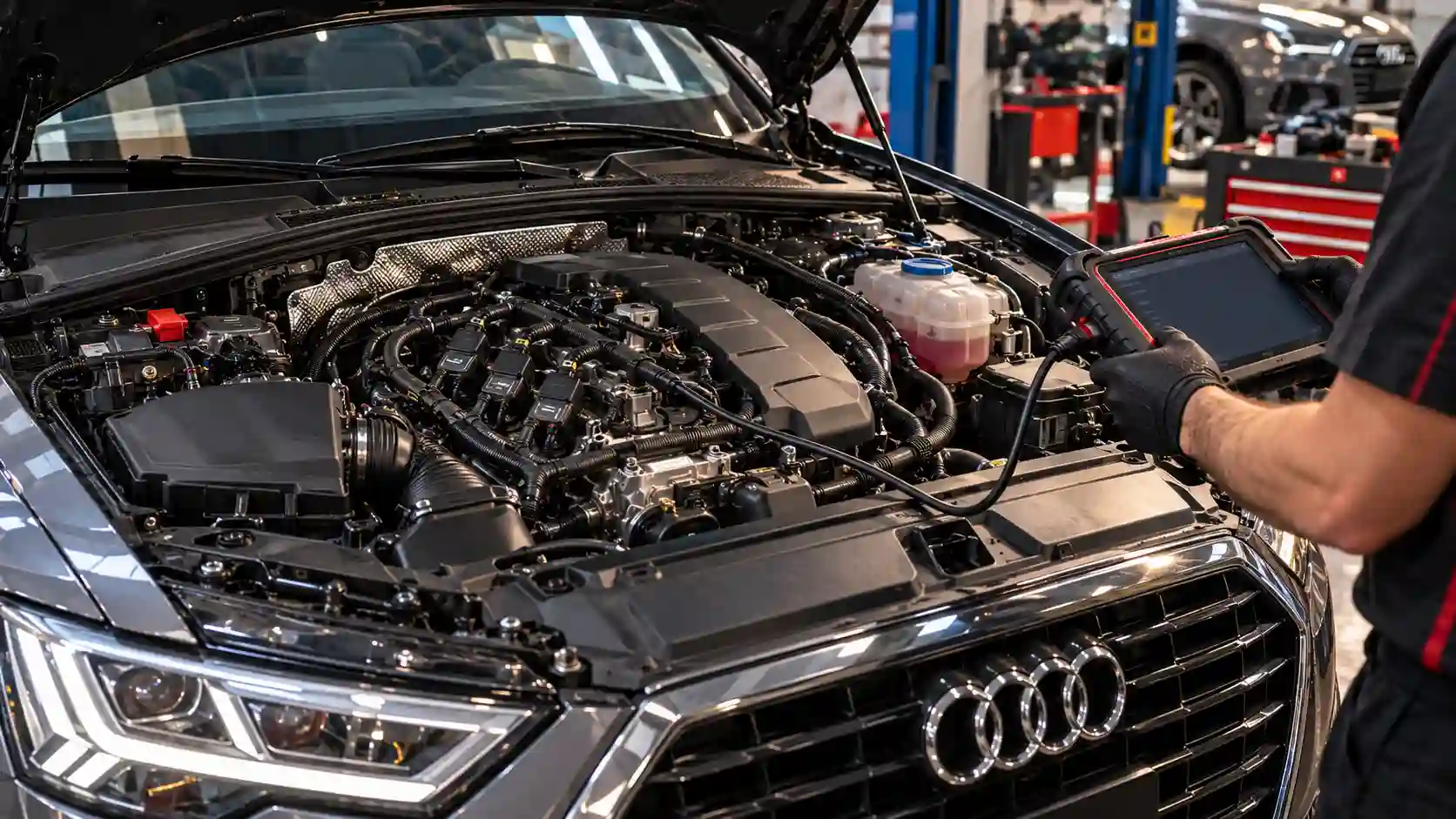
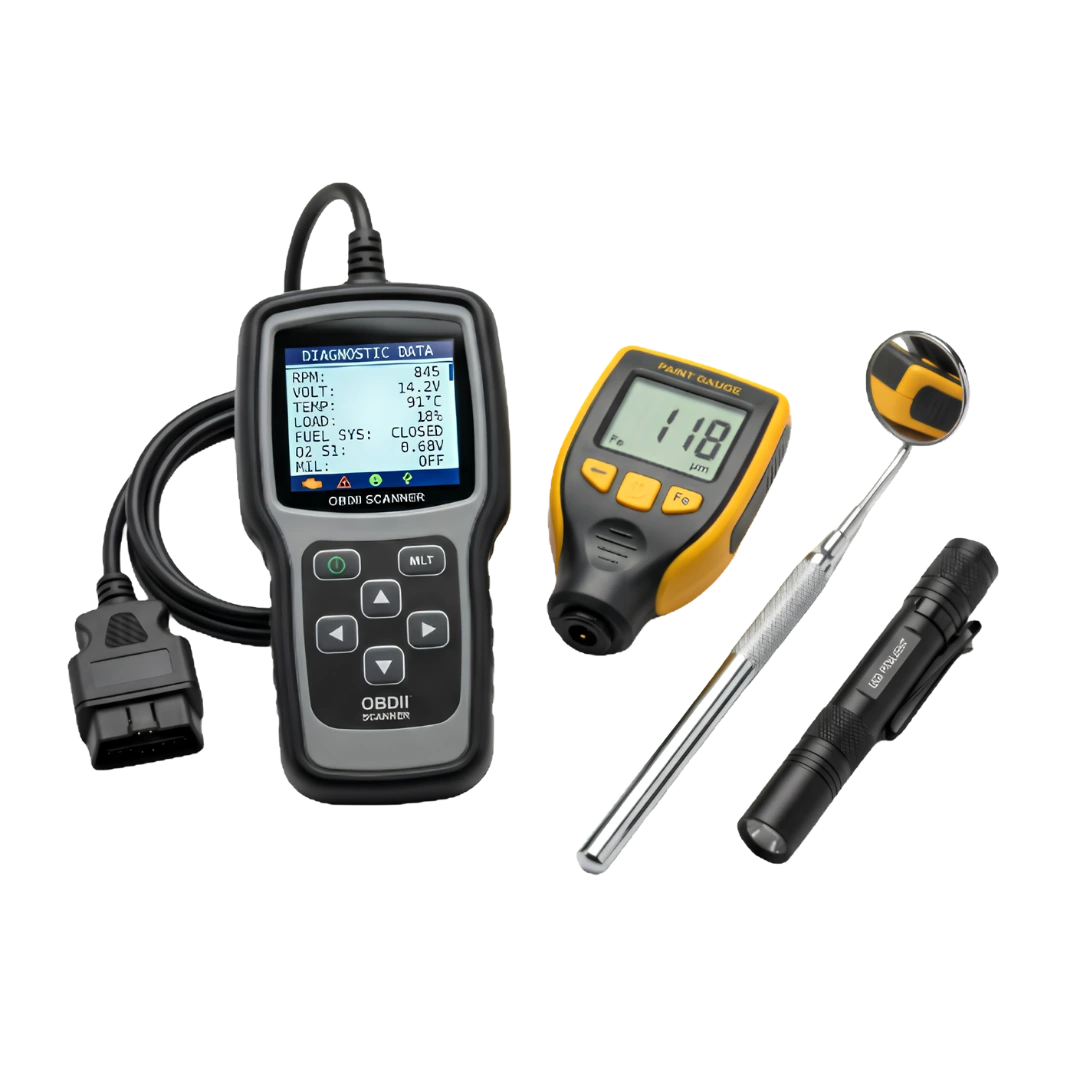
A proper check starts with a diagnostic scan of the suspension control module, especially on air and DCC cars. The technician then measures ride height at each corner and compares it with Audi's limits.
Next comes a lift inspection for ball joint play, bush cracks, leaking shocks and split boots. A road test over bumps and at highway speed confirms the noises and vibrations the owner reported.
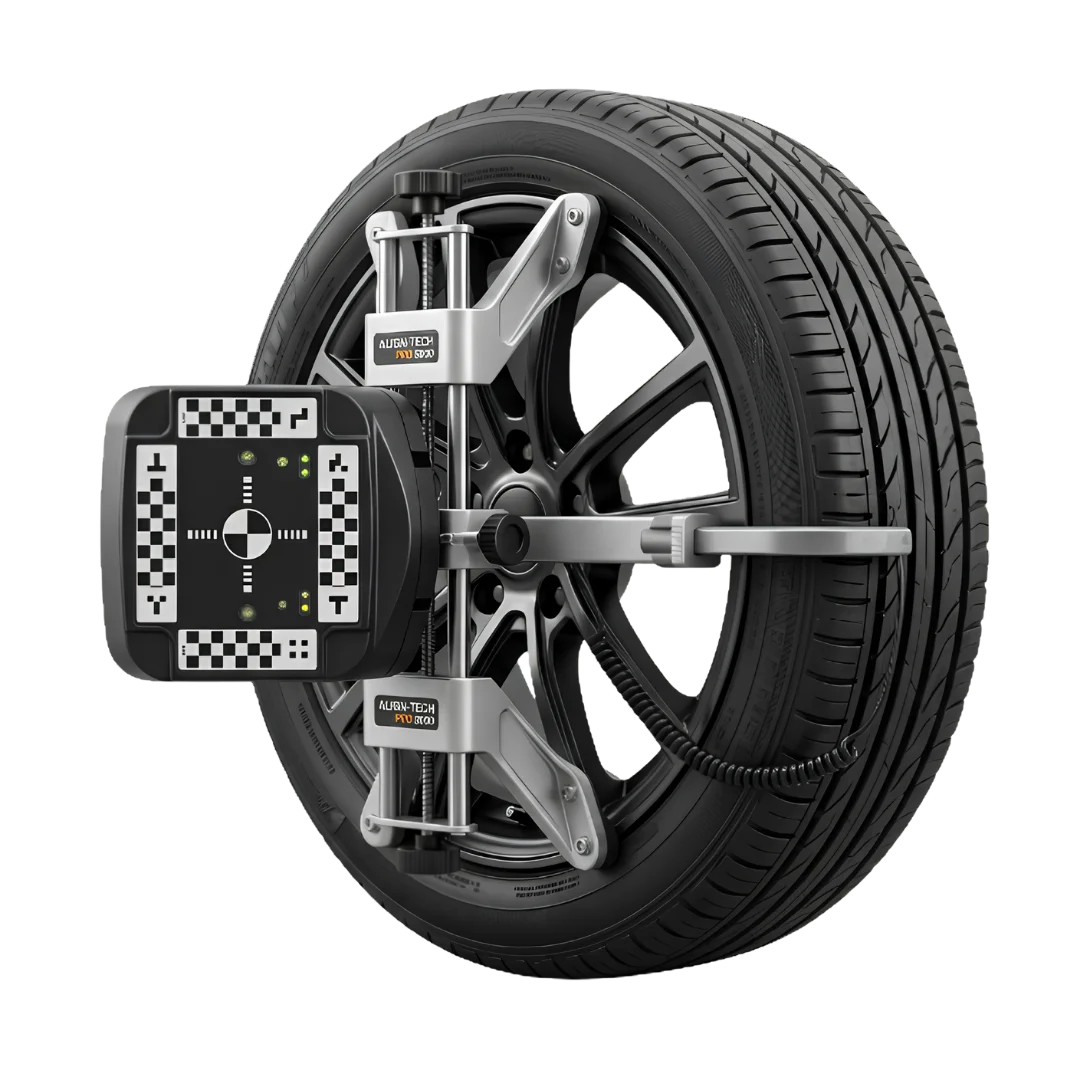
Finally, a wheel alignment after any repair sets the wheel angles correctly. Air suspension cars also need their ride height calibrated with diagnostic software. Suspension checks are part of a good service checklist, so wear is caught early.
Conclusion
Audi suspension rarely fails without warning. The car usually tells you through noises, ride height, and tyre wear long before anything breaks.
The main signs of Audi suspension problems are clunks, a sagging corner, nose diving, steering shake, body roll, uneven tyre wear and dashboard warnings. Each points to worn parts such as links, bushes, shocks, ball joints, or air springs. Abu Dhabi's speed bumps, heat and sand speed up that wear, so regular checks matter.
Zenfo Auto Services in Musaffah M9 offers a free diagnostic scan, free pick-up and delivery, and a 12-month warranty. Bring your Audi in for suspension repair, and most jobs are done within one working day.
Frequently Asked Questions
How often should Audi suspension be checked?
A suspension check every 20,000 km suits most Audis in UAE conditions. Heavy SUVs and cars driven over many speed bumps may need checks sooner, especially after the summer months.
Is it safe to drive with a clunking suspension?
A mild clunk from a sway bar link is not an emergency, but it should be checked soon. Clunks combined with steering shake or pulling can point to ball joint or tie rod wear, which is a safety risk.
Why does my Audi sit lower on one side after parking?
On air suspension models, a leaking air spring, valve block, or line is the usual cause. On steel-spring cars, a broken coil spring or worn strut is more likely.
Can worn suspension cause uneven tyre wear?
Yes, worn bushes and ball joints let the wheel angles shift, so tyres wear on the inner or outer edge. Fixing the worn parts and aligning the wheels stops the problem from coming back.
How long does an Audi suspension repair take?
Most common jobs, such as links, bushes, shocks, or a single air spring, take less than one working day. Larger air suspension repairs may take longer if parts need ordering.